Please, No Surprises: Eight Chairs in Europe, Three in China
On Friday, Europe chose eight people to speak for it. That night, three men announced a table for three. And Europe's most powerful leader said "please."
On Friday, Europe chose eight people to speak for it. That night, three men announced they'd decide the world without any of them. And the most powerful leader in Europe said "please."
By A. Kade · Sunday 15 November 2026
"Please, no surprises."
That's what the Chancellor of Germany said on Friday morning in Dublin. Not a commentator, not an activist: the head of government of the largest economy in Europe, a country of 84 million people with one of the biggest militaries on the continent.
"Please, no surprises. Stay on Europe's team and stand with Ukraine."
He was talking to Donald Trump. He was talking about a meeting Europe wasn't invited to.
I've read that sentence twenty times since Friday, and every time it makes me feel the same thing. Not anger, at first. Shame. The kind you feel when you watch someone you used to respect beg in public.
Then the anger comes.
•••
Eight chairs
Let me tell you how Europe spent its week.
For a month, everybody asked Europe to name one person to speak for it in the talks on Ukraine. Kyiv asked. Washington asked. Even Moscow asked. One name. One phone number. Zelenskyy, a man running a country at war, flew to Dublin and told Europe's leaders, slowly, like you'd explain it to a child: "We need to choose very concrete personalities."
Europe met. Europe debated. And on Friday, Europe announced its answer.
France. Germany. Italy. Poland. The United Kingdom, which left the European Union nearly seven years ago. The European Council. The European Commission. And NATO.
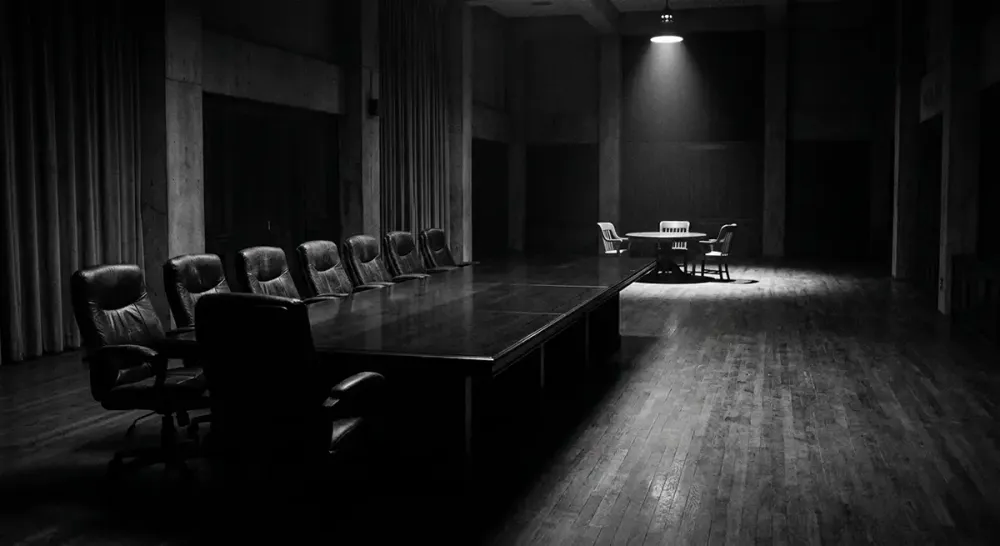
Eight chairs.
"Europe must speak with one clear and united voice," said the President of the European Council, standing next to the other seven.
"We decide on who represents us, and that's what we've done today," said the President of the Commission.
The EU's actual foreign policy chief, the woman whose job description is literally to speak for Europe on foreign policy, asked to do her job. She didn't get a chair.
And the whole thing happened at what was meant to be the EU's first-ever summit on artificial intelligence. They'd flown in one of the fathers of AI, a Nobel laureate who warns that this technology could end us, to talk to them about the future of the human species.
They spent it arguing about the seating plan.
•••
Three chairs
That same Friday night, the White House announced another meeting.
Trump. Putin. Xi. Next week, in Shenzhen, on the sidelines of the Asia-Pacific summit. The "first-ever trilateral meeting" between the leaders of the United States, Russia and China.
Three chairs.
And look at the agenda.
Nuclear weapons. The White House says the president will discuss "the reduction of nuclear weapons in the world." Europe has two nuclear powers, France and Britain. Both of them are on Europe's brand-new negotiating team. Neither has a chair in Shenzhen. The world's nuclear future is being discussed, and the only two European countries with warheads will read about it the next morning.
Iran. The war that pushed your energy bill up. The war that closed the Strait of Hormuz. The war that turned eurozone inflation into the highest in three years. Europe pays for that war at every petrol pump and every radiator. Europe isn't in the room.
Ukraine. Not on the agenda, says Washington. "It doesn't seem appropriate." Which might even be good news, if you trust it. Merz doesn't. He said some fear Shenzhen "could become, so to speak, a second Anchorage." He means the Alaska summit last year, where Trump rolled out the red carpet for Putin and Europe watched on television.
So, to sum up the week:
Europe's team: eight chairs, zero meetings. The other team: three chairs, the planet.
•••
"Please"
I want to stay on that word, because it's the whole story.
Europe didn't say we expect. It didn't say we insist, or we won't accept, or any deal about us without us is void. It said please.
When did that happen? When did 450 million people, one of the biggest markets on earth, the continent that wrote the Geneva Conventions and the European Convention on Human Rights, the place that invented the fucking idea of a parliament, become a continent that says please to the people deciding its future?
I'll tell you when. It happened slowly, and then all at once.
It happened every time a summit ended with a declaration instead of a decision. It happened every time a leader said "strategic autonomy" in a speech and then bought more American gas, more American weapons and more American cloud. It happened every time Europe solved a crisis by founding a new format instead of making a choice. E3. E5. The Weimar Triangle. The Coalition of the Willing. The European Political Community. Shell Bay. Europe has more formats than a printer.
And it happened this week, when the one thing Europe was asked to do, pick one name, turned into eight names, because nobody in the room was willing to give up their own chair for the good of everyone else.
That's not a diplomatic failure. That's a character failure.
•••
The people whose map it was
In February 1945, three men sat at a table in Yalta and drew the map of Europe.
One of them was European. Churchill was there. But the people whose map it was, the Poles, the Czechs, the Hungarians, the Balts, weren't. Poland's government was sitting in exile in London, a few streets from Churchill's office, and nobody asked it either.
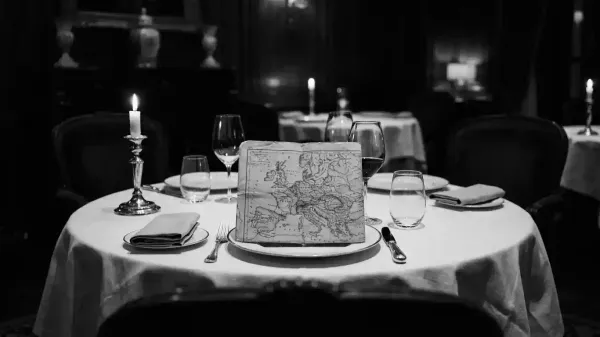
That's the thing about tables. It's never "Europe" that gets left out. It's always the part of Europe that's on the plate.
Next week, three men will sit at a table again. I'm not saying it's Yalta. I'm not saying it's Munich. I don't know what it is yet, and neither do you. Maybe they'll talk about nuclear weapons and nothing else. Maybe they'll even cut some. If they do, I'll be the first to say it: fewer warheads is good for every human being on this planet, and I'd thank all three of them.
But here's what I do know. Whatever they decide, about Iran, about energy, about Ukraine if it comes up "inappropriately" over coffee, Europe will learn about it from a press conference. And then Europe will hold a summit to discuss its reaction. And then it'll found a new format. And then it'll say please.
•••
The honest part
Let me give the other side its due.
Europe is twenty-seven democracies, not one country. Nobody elected a European president who can sign for all of us, and in some ways I'm glad nobody did. Eight chairs is ugly, but it's what happens when you insist that Poland gets a voice and Italy gets a voice and the East isn't sold over its head. Poland, in fact, demanded a seat exactly because it remembers 1945. I understand that. I respect it.
And to be fair to Merz: saying "please" in public is sometimes the only way to say "don't you dare" without starting a fight you can't win.
Fine. All true.
But a union that can't name one voice when its own continent's war is being negotiated is not being respectful. It's being absent. And absence has a price. We already know who pays it.
•••
So here's what I want to say
To the leaders of Europe:
Stop saying please.
You're not beggars. You're the governments of half a billion people. You have the money, the industry, the history and, yes, the warheads. The only thing you don't have is the will to agree among yourselves before somebody else agrees for you.
Last week, I wrote: put a fucking chair at that table and sit in it.
You put eight chairs. In your own room. And the real table is in China.
So no, I won't say please. I'll say what your citizens are thinking on their way to work this morning, while they look at their energy bill and their kids' military-service letter and a news alert about three men in Shenzhen:
We don't want a better seating plan. We want a Europe worth inviting.
And if you can't give us that, then at least have the decency to stop being surprised.
Because the only people in this story who'll be surprised next week are the ones who keep asking for no surprises.
•••
A. Kade writes The Kade Frequency, an investigative publication on institutional power, financial capture, and the long project of making democracy something real.
No sponsors. No filters. No propaganda.
•••
Sources and references
- Nasha Niva, "'Please, no surprises.' Merz urged Trump to stand with Europeans ahead of his summit with Xi and Putin", 13 November 2026
- Euronews, "Trump, Xi and Putin to meet in China, White House says", 14 November 2026
- ABC News, "Trump to meet with Putin and Xi in China next week, US officials say"
- EUobserver, "EU leaders hand Ukraine peace talks to France, Germany, UK, Italy, Poland plus Brussels instead of a single envoy"
- Yahoo News / AFP, "EU leaders bring Italy and Poland into Ukraine peace talks team as Kallas fights for spot"
- Euronews, "Ukraine envoy row hijacks EU leaders' first AI summit", 13 November 2026
- Euronews, "Zelenskyy to meet US envoys in Dublin after Russia peace talks", 12 November 2026
- EUobserver, "First talks about EU envoy on Ukraine war to dominate Dublin summits" (Sikorski quote)
- Trading Economics, euro area inflation, October 2026
By the same author
Two books in restrained literary nonfiction
A. Kade's companion volumes, a meditation on thinking and character, and a meditation on love, real and imagined.
View the books →