On the Menu: Europe Isn't at the Table. It's Paying.
If you're not at the table, you're on the menu. This week I watched my continent get served, and then handed us the bill.

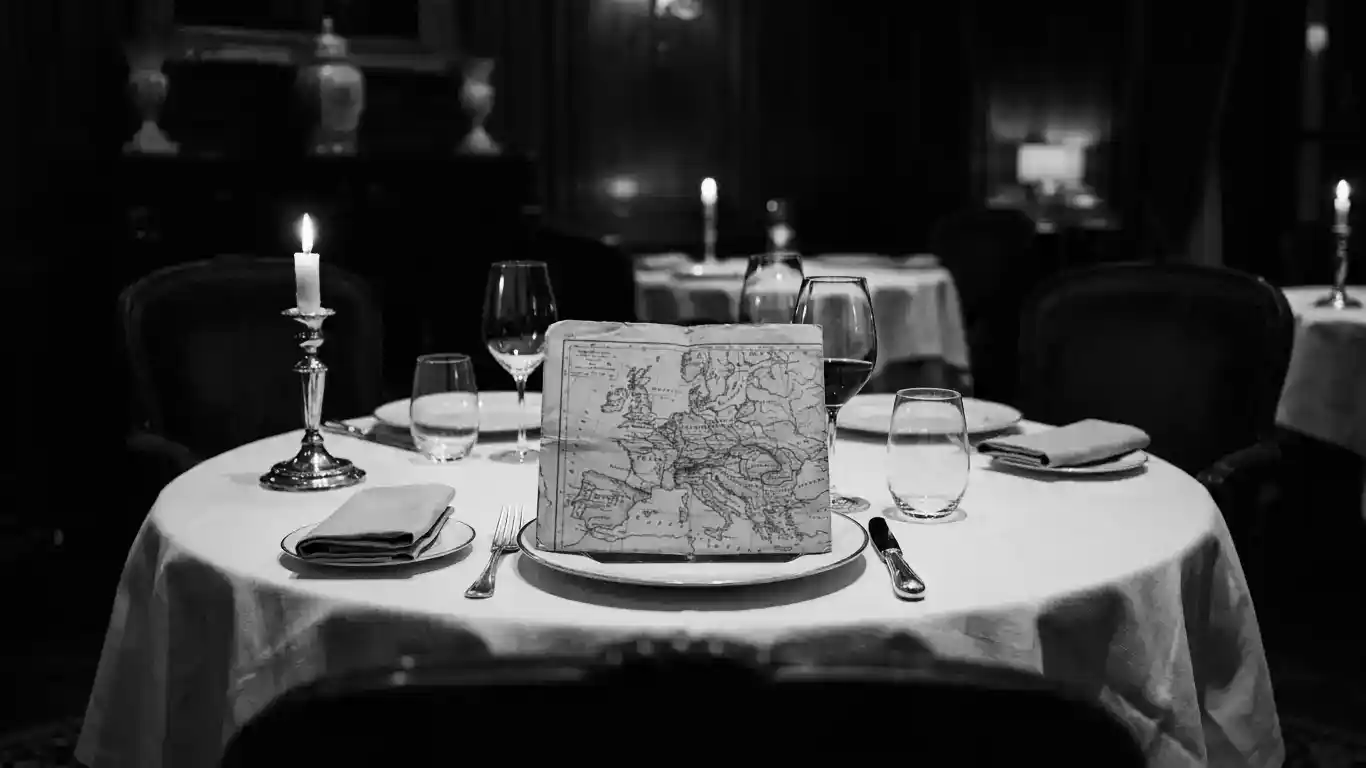
Washington and Moscow are drawing up the future of Europe. Europe is still deciding who goes to the meeting. And we're paying for the dinner.
By A. Kade · Sunday 8 November 2026
There's an old line in diplomacy. If you're not at the table, you're on the menu.
This week I watched my continent get served.
On Thursday, the President of the United States met a Kremlin envoy in the White House. Afterwards he told reporters there would be "a big agreement" on Ukraine, and that "it's going to involve more than Ukraine. I could even say it might involve all of Europe." Then, because he can't help himself: "It's going to be a big, beautiful agreement, and everyone's going to be thrilled."
Everyone. Including, presumably, the 450 million people who live in "all of Europe" and weren't in the room.
The man working on the details, the "broader European security architecture" according to the White House, is Jared Kushner. Yes, the same Jared Kushner whose luxury resort on Albania's coastline sent Albanian students into the street last month. He's apparently good at it. First the beach, then the continent.
Meanwhile, Europe.
Italy's prime minister wrote a letter to the President of the European Council saying Europe is "proceeding in disarray." She proposed that EU leaders discuss who should negotiate on Europe's behalf at a summit in Dublin this week, and make a formal decision in December.
Read that again. A deal that might "involve all of Europe" is being shaped in Washington right now. Europe's plan is to have a conversation next week about who might attend the conversation, and to decide in December.
The Kremlin, meanwhile, has said for months that it doesn't want the EU as a mediator anyway. And the EU's spokeswoman said, with a straight face, that it is "up to the EU to decide on matters affecting its security."
Is it? Then fucking decide something.
•••
The bill
Here's what makes me angry. It isn't Trump. Trump does what Trump does. It isn't Putin either. Powers behave like powers. They always have.
What makes me angry is that while they eat, we pay.
Eurozone inflation hit 4% in October, the highest in three years. Energy prices are up 20.8% in a single year. In Italy, the country whose prime minister is writing letters about disarray, inflation is 5.6%. Every one of those numbers is a kitchen somewhere: a radiator turned down, a car left in the drive, a basket put back on the shelf at the till.
In Belgium, the government can't even agree a budget. The deficit is 5% of GDP and the debt more than €735 billion. The Prime Minister handed the King his resignation on Monday, and the King put it in a drawer. On Friday, after another visit to the Palace, the new deadline for a budget became Christmas. There has been roughly one general strike a month for a year, and the next is on 23 November.
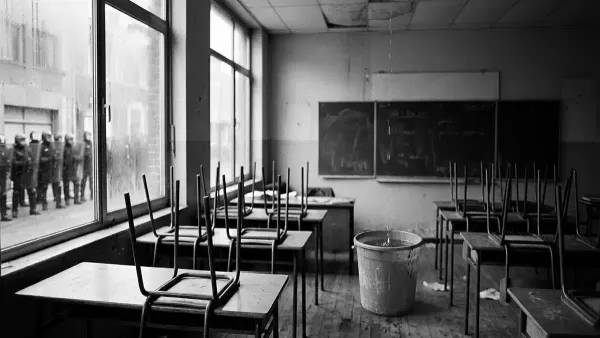
In Germany, more than 100,000 young people marched last weekend in over 30 cities, according to the organisers. They were marching against education cuts, against the cost of living and against compulsory military service. "Funding for education and social services are being cut, while the cost of living keeps rising," said Veronika Dinter, 23, a student from Hannover. "This crisis is the political failure of our government."
She's right. And it isn't only hers.
So let me spell out the deal Europe has been offered this autumn, because nobody in Brussels will.
You pay for the energy. Your kids get the military survey. Your schools get the cuts. And the future of your continent gets decided by other people, in other capitals, over dinner.
That's not a partnership. It's a tab.
•••
How we got here
I want to be clear about whose fault this is, because it's easy to blame the people at the table, and it's the wrong answer.
For thirty years, Europe's leaders made a choice. They decided that being rich was the same as being strong. Comfort could stand in for courage. Somebody else's army, somebody else's gas and somebody else's chips were fine, as long as the prices were low and the summit photos looked good.
They built a continent that could regulate the curvature of a cucumber and couldn't agree who picks up the phone when Washington calls.
They held summit after summit. They wrote declarations, "strategic autonomy," "a geopolitical Commission," "Europe must speak with one voice." Then, the first time it really mattered, they wrote a letter proposing to discuss, at the next summit, who should speak.
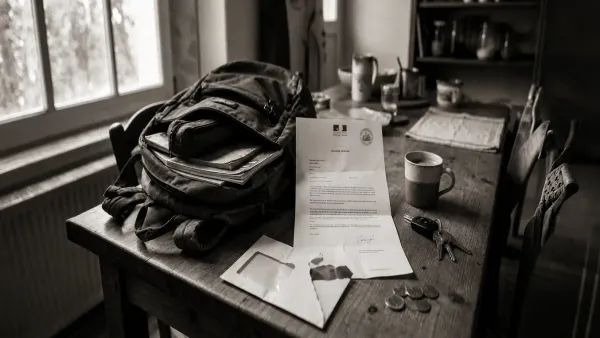
And the people who pay for that choice are never the ones who made it. The commissioners still have their heating. The prime ministers still have their cars. Their children aren't the ones getting the survey in the post.
•••
The people who remember
I grew up in the east of this continent. People there remember something that people in the west mostly read about in textbooks.
In February 1945, three men sat at a table in Yalta and decided where half of Europe would live for the next forty-five years. Not one of the hundred million people they decided for was asked. My part of Europe got the menu, and we ate it for two generations.
When I hear "a big agreement" that "might involve all of Europe," negotiated between Washington and Moscow while Brussels arranges its seating plan, I don't hear a peace deal. I hear a sound I recognise.
I'm not saying it's Yalta. One American analyst said this week it reminded him of Munich in 1938. I'm not saying that either. But I am saying that the people of Eastern Europe know exactly what it feels like when big powers draw maps over your head. And we know who pays.
We do.
•••
The honest part
Let me give the other side its due, quickly.
Europe is 27 countries, and none of them has given the others permission to speak for it. That's the price of a union of democracies, not a failure of nerve. A peace in Ukraine, if it's real, would save lives. Thousands of them. If Trump delivers that, I'll say so. And yes, Kushner's team says the plan respects every country's sovereignty and keeps NATO central.
Fine. Then show us. Put it on the table, with us at it.
Because a framework written for Europe without Europe isn't sovereignty, whatever the press release says. It's a menu card.
•••
So here's my message
To the leaders of Europe, from someone who pays your bills:
You had thirty years. You had the money, the institutions, the treaties and the summits. You told us Europe was a power.
Now the powers are deciding the future of our continent, and you're writing letters about who gets to go to the meeting.
Stop holding summits about summits. Stop telling us you're "deeply concerned." Stop sending our sons surveys while you can't send a single negotiator to the room where the deal is being made.
Pick someone. Pick anyone. Put a fucking chair at that table and sit in it.
And if you can't do that, if Europe really can't decide who speaks for 450 million people, then at least have the decency to stop pretending. Stop calling it a union, and stop calling it strategic autonomy.
Call it what it's become: a very expensive restaurant, where we're the meal and we're also paying.
The kids in Hannover already know. "This crisis is the political failure of our government."
She's 23. She saw it before you did.
•••
A. Kade writes The Kade Frequency, an investigative publication on institutional power, financial capture, and the long project of making democracy something real.
No sponsors. No filters. No propaganda.
•••
Sources and references
- RTÉ, "Trump says 'big, beautiful agreement' on Ukraine 'might involve all of Europe'", 6 November 2026 (Trump quotes; Meloni letter; Dublin and December timeline)
- RFE/RL, "White House outlines broader European security plan ahead of Ukraine peace talks" (Kushner, EU spokeswoman, analysts)
- The Moscow Times, "Kremlin rejects EU mediation in Ukraine peace talks"
- Trading Economics, euro area inflation, October 2026 flash estimate
- Eunews, on Belgium's budget crisis, 2 November 2026
- Belga News Agency, "De Wever moves budget deadline to Christmas after meeting with King Philippe"
- Al Jazeera, Gen Z protests in Germany, 31 October 2026
- Anadolu, "More than 200 arrests in Germany after Gen Z protests"
- Al Jazeera, on Albania and the Kushner-backed resort, 15 October 2026