The President's Portfolio
On May 14, 2026, the Office of Government Ethics released 113 pages logging more than 3,600 trades in a sitting president's name, in the very companies his decisions move. His family says the assets sit in a blind trust.


A sitting president disclosed thousands of stock trades in the companies his decisions move. His family says the assets sit in a blind trust. Both cannot be straightforwardly true, and the system built to tell us which is, by design, incapable of doing so. This is what the collapse of a norm looks like. And why Europe, with stronger rules, has failed at the same task by a different route.
By A. Kade
This is a developing story. The facts below are drawn from public filings and reporting as of late May 2026; the dispute over how Trump's assets are managed remains unresolved. This piece will be updated as more becomes known.
Start with the document, not the outrage.
On May 14, 2026, the U.S. Office of Government Ethics released two Form 278-T periodic transaction reports covering January 1 through March 31. The filing ran to 113 pages. It logged, by most counts, more than 3,600 individual securities transactions, one tally put it at 3,642, executed in the first ninety days of the year. That is roughly fifty-eight trades per market day. The cumulative value, disclosed in the broad ranges federal ethics rules permit rather than exact figures, fell somewhere between $220 million and $750 million.
The transactions were in the president's name.
This is, as far as anyone has been able to determine, the first public look in modern presidential history at an active public-markets portfolio operating in a sitting president's name while he holds office.
The document exists because the law requires it. Presidents are not barred from owning or trading securities. They are required to disclose. That single asymmetry, permitted to trade, required only to report, is the entire subject of this piece. Because what the report reveals is not a crime. It is something more durable and more troubling than a crime. It is the quiet confirmation that the wall between private wealth and public power, in the most powerful office on earth, is now maintained by nobody.
•••
What the portfolio holds
The trades skewed heavily toward the sectors most directly shaped by presidential decisions.
According to the filings as reported by NBC News, CNBC, Reuters, Variety, and Fortune, the first-quarter activity included securities tied to Microsoft, Meta, Oracle, Broadcom, Nvidia, Amazon, ServiceNow, Adobe, Texas Instruments, Dell, Bank of America, and Goldman Sachs, along with media companies, Netflix, Comcast, Disney, Warner Bros. Discovery, Paramount Skydance, and municipal bonds. Fortune's reading of the report described a deliberate rotation: large trims of legacy big-tech positions at the quarter's high, paired with purchases of software names that had recently sold off.
The dollar amounts are not the point. The overlap is the point.
This is a portfolio concentrated in the industries a president's decisions move most directly. Tariff policy moves importers and retailers. Defense procurement moves Boeing. Chip-export policy moves Nvidia and AMD. Media-merger approvals move Paramount, Warner, Comcast. Banking regulation moves Goldman and Bank of America. A president making decisions across all these domains while holding, or trading, positions in all of them does not need to do anything illegal for the conflict to be total. The conflict is structural. It exists in the overlap itself, regardless of intent.
And the timing, in several documented cases, is difficult to look away from.
Representative Don Beyer's review of the filing, as reported by Moneywise, flagged a $500,000-to-$1 million purchase of Nvidia on January 6, one week before the Commerce Department approved the sale of certain Nvidia chips to China on January 13. A second Nvidia purchase, in the $1 million-to-$5 million band, was recorded on February 10, roughly a week before Nvidia announced a major processing-power deal with Meta. A January 6 purchase of AMD shares preceded Commerce authorization, on January 13, for AMD to sell chips to Chinese customers.
The careful word in all of the responsible coverage is coincided. Not caused. There is no public evidence that nonpublic information drove these purchases, and none is asserted here. What can be said is narrower and still damning: the president's disclosed portfolio repeatedly took positions in companies, days before his own administration made decisions favorable to those companies. Whether that is foresight, coincidence, or something else, the disclosure system cannot tell us. Which is precisely the problem.
•••
What the filing does not show, and the dispute now underway
A serious account has to state the limits of the document, because the document's limits are themselves part of the story.
The Form 278-T reports disclose transaction values only in ranges, not exact amounts. They do not disclose who actually executed the trades. They do not reveal the full structure of the accounts. They exclude entire categories of assets, mutual funds, certain pooled investment vehicles, holdings below the reporting threshold. The public record, in other words, shows a great deal and conceals a great deal, and the concealment is built into the rules.
This matters because of the dispute now unfolding in real time.
The president and his family have stated that the assets are not actively managed by any family member. Responding to criticism from Senator Elizabeth Warren, Trump wrote that the family's assets are "invested in a blind trust by the largest financial institutions in broad market indexes," and that to suggest individual stocks are bought or sold at any family member's discretion "would be a lie and blatantly false." He offered an analogy: buy a broad index like the "Schwab 1000" and you will get some exposure to Nvidia along with a thousand other companies. Eric Trump has made similar statements, describing the holdings as managed by independent institutions in broad-market vehicles.
Set that claim beside the filing.
A genuine blind trust, in the meaning the term has carried since Lyndon Johnson pioneered the presidential blind trust in 1963, is an arrangement in which the office-holder cannot know what the trust holds or trades, because independent trustees manage it without communication. Its entire purpose is to make conflict-of-interest impossible by making the holdings invisible to the official. A blind trust does not generate a 113-page periodic transaction report listing thousands of individual named-company trades, because the existence of such a report means someone is tracking, and disclosing, exactly what is being bought and sold in the official's name.
Both things cannot be straightforwardly true. Either the assets are in a blind trust in broad indexes, or the filing accurately reports 3,642 individual transactions in specific named companies. The two descriptions do not fit together without further explanation that has not yet been provided.
This is the unresolved center of the story, and it is genuinely unresolved. It is possible there is an account structure that reconciles the two claims. It is possible the disclosure captures activity the family does not direct. It is possible the "blind trust" language is being used loosely for an arrangement that is not blind in the technical sense. As of this writing, the public does not know, and the disclosure system, by design, cannot force the answer into the open. The story is developing. What is already clear is that the official explanation and the official filing are in tension, and that the machinery built to resolve such tensions is not resolving it.
•••
The vanished norm
Here is the part that matters more than any single trade.
What Trump has done is, by the letter of the rules, permitted. Presidents are exempt from the trading restrictions that apply to many other federal officials. They must disclose; they need not divest. The requirement is transparency, not separation.
But for sixty years, presidents of both parties behaved as if separation were required, because a norm did the work the law did not.
Lyndon Johnson pioneered the presidential blind trust in 1963. Since then, as multiple outlets noted in their coverage of the Trump filing, modern presidents placed their assets in blind trusts managed by independent trustees, held them in index funds and Treasuries, or, in Jimmy Carter's case, liquidated entirely, selling the family peanut business to avoid even the appearance of entanglement. The practice was not uniform and it was not always as clean as advertised; some "blind" trusts were blind in name more than in fact, and the modern post-presidency, the speaking fees, the book advances, the board seats, the foundation money, became its own well-documented mechanism for converting public service into private fortune after leaving office. The firewall was always, in part, a performance.
But it was a performance that mattered. The norm of divestment or blind trust was a collective agreement to pretend, convincingly enough, that the office was a trust and not an asset. And a norm, unlike a law, survives only as long as each office-holder chooses to honor it and the absence of penalty does not invite its abandonment.
Trump declined the performance. He did not change the law; he did not need to. He simply stopped doing the thing every predecessor had done, and discovered that nothing happened. No mechanism compelled divestment. No penalty attached to its absence. The Office of Government Ethics can collect and publish the disclosures; it cannot prevent what they disclose. His own Treasury Secretary, Scott Bessent, who had publicly called for a ban on congressional stock trading since 2025, has not addressed the matter.
This is how norms die. Not by repeal, by a single demonstration that they were never enforced, followed by the silence that confirms it. Every future office-holder now knows what this filing proved: the separation of private wealth from public power was optional all along. That knowledge does not un-learn itself. It is, in its way, the most lasting thing this presidency will produce.
•••
The European mirror
It would be easy for a European reader to treat this as an American disease, the predictable result of a system with weak rules and a cult of the presidency. That reading is comfortable and wrong.
Europe has the rules America lacks. It has them in abundance. Mandatory asset disclosure. Codes of conduct. Cooling-off periods. Independent ethics committees. An Ombudsman whose office exists to investigate maladministration. Article 245 of the EU Treaty, which requires former commissioners to behave "with integrity and discretion."
And capture happens anyway. It simply happens through a different door.
Consider the case that became the symbol of the problem. In 2016, José Manuel Barroso, president of the European Commission for ten years, joined Goldman Sachs as non-executive chairman of its international arm and an adviser, at the precise moment the bank was navigating the consequences of Brexit. The move provoked exactly the outrage you would expect: a petition signed by thousands of Commission staff, condemnation from the European Ombudsman, a referral to the Commission's ad hoc ethical committee, public criticism from heads of state.
And then the machinery did what machinery does. The ad hoc ethical committee concluded, in October 2016, that Barroso had broken no rule. The 18-month cooling-off period then in force had been respected, he joined Goldman more than 18 months after leaving office. The committee found no breach of EU law.
Sit with that. Europe's formal apparatus, the cooling-off period, the ethics committee, the Treaty language, examined one of the most flagrant revolving-door cases in the Union's history and found it compliant. As Corporate Europe Observatory put it after the Ombudsman's final ruling, the affair "exemplified all that is wrong with the Commission's approach to the revolving door: weak ethics rules, an ethics committee with no real powers and too many insiders." Transparency International, the Ombudsman Emily O'Reilly, and watchdog groups across Brussels reached the same conclusion. Later reporting and a complaint from ALTER-EU suggested Barroso had gone on to use his access to lobby a sitting commissioner on Goldman's behalf, a meeting in a hotel, no minutes kept, though the central fact for our purposes never changed: he broke no rule, because the rules were built to be survivable.
Barroso is the cleanest case, not the only one. The European Parliament's own research service has documented the revolving door as a structural feature of Brussels, not an aberration; Corporate Europe Observatory has tracked the steady rise in corporate lobbying spending, with big-tech lobbying budgets rising sharply over the past decade until they dominated the top tier. The pattern recurs across the continent's capitals, ministers moving to the industries they regulated, the second-jobs and access controversies that surface and subside. The mechanism is consistent: not the naked abandonment of a norm, as in Washington, but the patient routing of capture through rules designed to look like prevention.
•••
The same disease, two immune systems
Here is the synthesis, and it is the part of this story almost no one is telling.
Both systems have failed at the identical task: keeping private wealth and public power separate. They have failed by opposite mechanisms, and the opposition is instructive.
The American failure is norm-erosion with transparency on top. The rules are thin, disclose, don't divest, so the separation depended entirely on a norm, and the norm collapsed the moment someone declined it without penalty. But because disclosure law survives, the conflict is visible. You can read the 113-page filing. You can see the Nvidia purchases dated against the Commerce decisions. The American system now shows you the capture in neat columns and does nothing about it.
The European failure is the reverse. The rules are dense, cooling-off periods, ethics committees, Treaty obligations, an Ombudsman, so the separation is heavily formalised. But capture routes around the formality, and the formality then certifies it as compliant. Barroso "broke no rule." The rules examined the case and blessed it. The European system processes the capture through its machinery and emits a finding of no breach.
In Washington, the damning thing is legal because the law never required separation. In Brussels, the damning thing is legal because the law that required it was built too weak to bind.
Either way, the damning thing is legal. That is the point. The captured class, the overlapping network of officials, financiers, and corporate principals whose interests have aligned across both continents, does not need a particular legal system. It adapts to whichever one it is operating inside. Strong rules become a shield ("no breach was found"). Weak rules become a permission slip ("presidents may trade"). The arrangement is indifferent to the mechanism. It cares only about the outcome, and the outcome is the same on both sides of the Atlantic: the people who write the rules, and the people who profit from them, are increasingly the same people, and the wall between them has become a document rather than a barrier.
This is the architecture this publication has described before, the structural alignment that produces consistent outcomes without requiring a conspiracy to coordinate them. The president's portfolio is not an exception to that architecture. It is the architecture wearing its most visible possible costume: the single most powerful office on earth, trading the companies it regulates, while the system built to prevent exactly this prints the evidence and shrugs.
•••
Why the candor matters
There is a strange, cold honesty in the open version, and it is worth naming because it cuts against the easy outrage.
When the firewall was a performance, citizens could believe a separation existed. The blind trust, the divestment, the Carter peanut farm, these were rituals that let the public trust that the office was insulated from the office-holder's fortune. The ritual was partly theater, but the theater sustained a belief, and the belief had value.
What this presidency has done is end the performance. And in ending it, it has made the structure visible in a way decades of ritual concealed. You can now see, in a public filing, a sitting president trading the companies his decisions move. The pretense is gone. The columns are right there.
This is not a defense. It is the opposite of a defense. But it is a recognition that you cannot fix what you cannot see, and that the open version at least ends the lie. The European method, capture certified as compliant by an ethics committee, is in one sense more corrosive precisely because it preserves the appearance of process. "No breach was found" is a more durable deception than a 113-page list of trades, because it wears the costume of accountability.
The candor, at least, is something. It is not justice. It is not reform. But it is the removal of a veil, and the removal of a veil is the precondition for anyone deciding to act. Now everyone can see clearly what was always, to some degree, there.
•••
What it costs, and what remains
The cost is not one man's enrichment. Fortunes have always been made adjacent to power. The cost is the death of an idea, the idea that public office is a trust held on behalf of others rather than an asset to be worked for personal gain. That idea was already weak. It is now, in the most visible office on earth, demonstrably optional. And the European mirror means there is no clean system to flee toward, no better-designed republic across the water where the separation actually holds. Both models have failed. The failure is structural, transatlantic, and bipartisan in every sense the word can carry.
What remains available is smaller and harder than reform, because reform requires the very institutions that have been captured.
It begins with refusing the inevitability. The most effective thing the arrangement does is convince people that this is simply how power works, that wealth and office have always mingled, that nothing can be done, that to notice is naive. That resignation is the arrangement's strongest defense. It is also false. The blind-trust norm held for sixty years. The European rules, weak as they are, were fought for and won. None of this was natural. All of it was built, which means all of it can be rebuilt, slowly, by people who refuse to accept that the document is the same thing as the barrier.
Independent investigations. Imperial expansion exposed. Pattern documented.
Get investigations delivered.
And it begins with seeing clearly: not with the easy story that one man is uniquely corrupt, but with the harder one, that two systems designed to prevent this have both failed, by opposite routes, and that the failure names something larger than any single office-holder. The president's portfolio is a symptom. The disease is the slow fusion, on both continents, of the people who hold power and the people who profit from it.
•••
The filing sits in the public record. One hundred and thirteen pages. Three thousand six hundred and forty-two transactions. A range of values the rules permit to stay vague. A dispute, still unresolved, over whether any of it is directed by the family whose name it bears.
It exists because the law still pretends the separation matters.
It describes, in neat columns, the thing the law was built to prevent.
That is the firewall now. Not a barrier. A piece of paper, filed on schedule, documenting in careful ranges the disappearance of the very thing it was designed to protect.
We will update this piece as the dispute develops.
F.A.Q.
What did Trump's 2026 financial disclosure reveal?
Is it legal for a U.S. president to trade stocks?
What is the dispute over the blind trust?
What does the disclosure NOT show?
How does this compare to past presidents?
What is the Barroso–Goldman Sachs case and why does it matter?
What is the article's central argument?
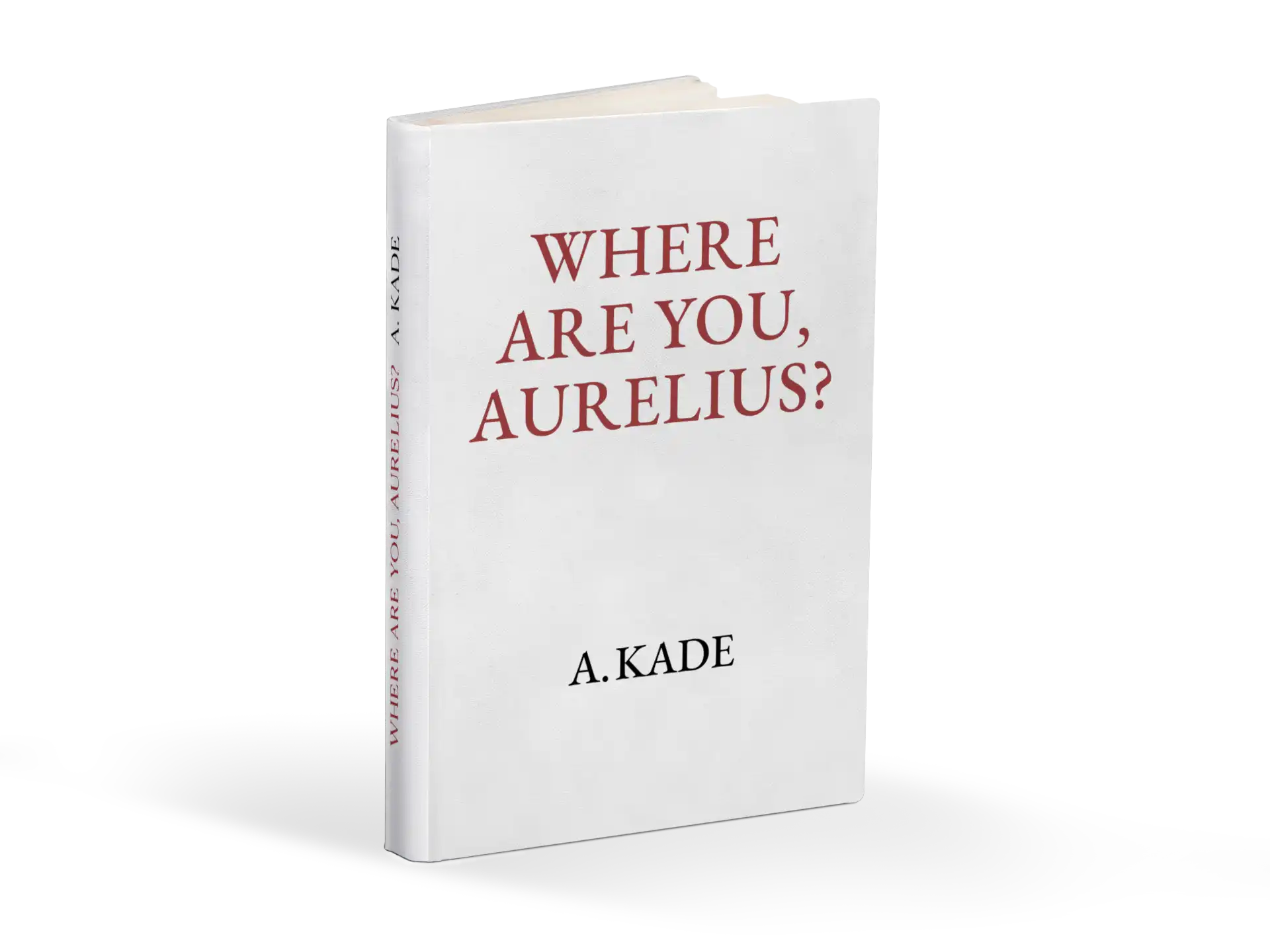
From the author
Where Are You, Aurelius?
A meditation on thinking, character, and becoming human inside a captured age.
Read on Amazon →A. Kade writes The Kade Frequency, an investigative publication on institutional power, financial capture, and the long project of making democracy something real.
No sponsors. No filters. No propaganda.
Sources: U.S. Office of Government Ethics Form 278-T filings (released May 14, 2026), as reported by NBC News, CNBC, Reuters, Fortune, Variety, Euronews, and Moneywise; Rep. Don Beyer's review of the filing; statements by Donald Trump and Eric Trump; European Ombudsman rulings and correspondence; European Parliament Research Service briefings on revolving-door rules; Corporate Europe Observatory; Transparency International EU; ALTER-EU.