The Fear: Two Architectures, One Grammar
I was born where fear had an address. I live where it has none. This month, in America, fear began reacquiring one. A report from inside both systems.
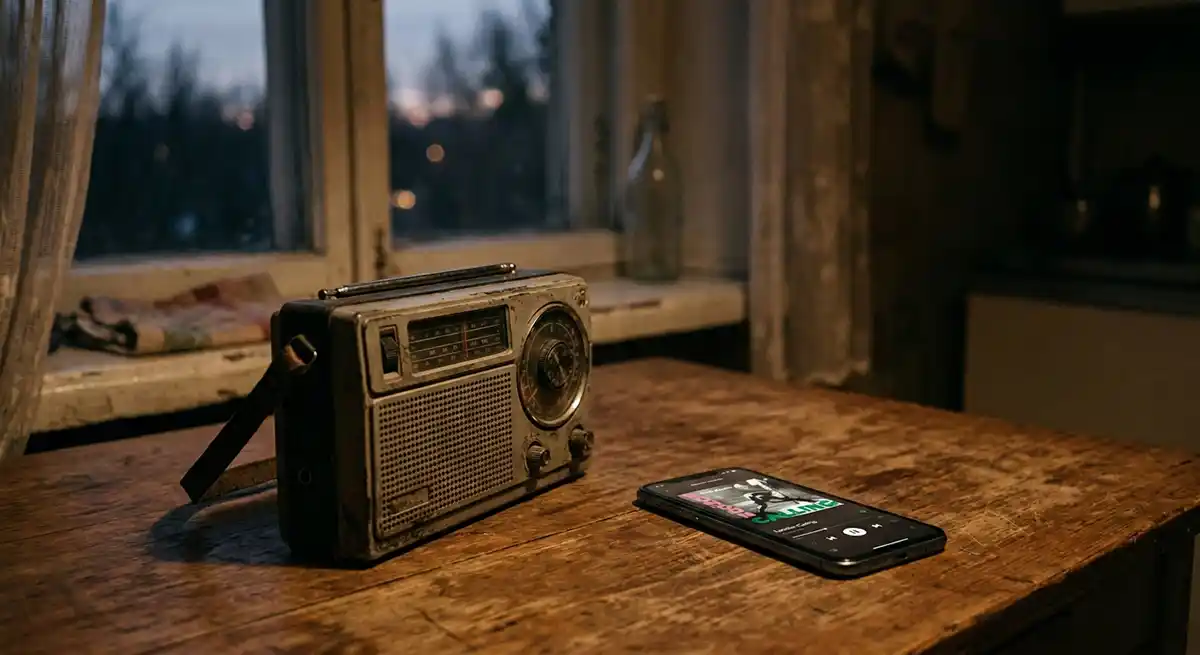
On the night of July 4, 2026, at the 250th anniversary of the American founding, the President of the United States described his domestic political opponents as a cancer that must be cut out. I was born in a country that governed through fear, and I have spent my adult life in countries that insisted they did not. This piece is about what I have learned by living under both, and about the month in which the two systems began, visibly, to converge.
By A. Kade
At Mount Rushmore, on the evening of July 3, 2026, the President of the United States declared that communism is a greater threat to America than the First World War, the Second World War, Pearl Harbor, or September 11. The following night, beneath the Lincoln Memorial, at the celebration of the republic's two hundred and fiftieth birthday, he completed the thought:
"It's like a cancer, you got to cut it out."
The menace in question was not a foreign army. It was not a nuclear arsenal or a terrorist network. It was, by the President's own account, domestic: the Communist Party, which he described as consisting of illegal immigrants, criminals, and people who do not want to work. The proximate trigger, as every serious observer noted, was that two democratic socialists had won primary elections, one in New York, one in Colorado.
Two primaries. A cancer. Cut it out.
I want to be careful about what this piece is and is not. It is not a piece arguing that the United States in 2026 is Ceaușescu's Romania, because it is not, and I will say precisely why it is not, at length, before this piece is done. Cheap equivalence is a gift to the people who profit from the real thing, and I refuse to give it.
But I was raised inside a system that governed through fear, by parents who were raised inside it more deeply than I was, and there is a specific competence you acquire from that inheritance whether you want it or not. You learn to recognise fear-based rule by its texture rather than by its flag. You learn that the vocabulary changes and the grammar does not. And when the President of the world's most powerful democracy stands beneath the statues of its founders and describes his domestic opponents as a disease in the body, the oldest sentence in the totalitarian phrasebook, the sentence that precedes every purge in the twentieth century's archive, the texture is unmistakable to anyone who was taught it young.
This piece is about that texture. It is about the two great architectures of fear that have governed the modern world, the one I was born under, and the one I live under now, how they differ, what each costs, and what it means that in the summer of 2026 they are visibly converging.
•••
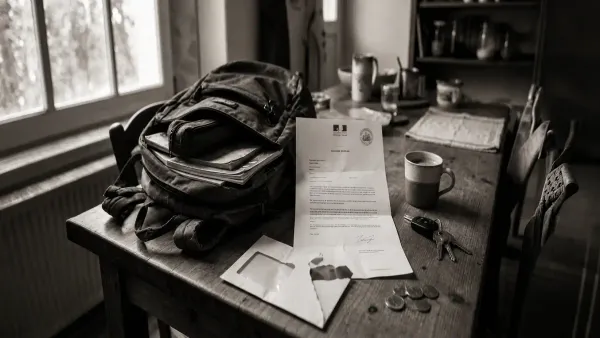
I was born in Romania, in the last years of the dictatorship. I have written elsewhere about the texture of that childhood, the small hesitations before certain sentences, the radio turned up before certain conversations, the assumption, correct more often than not, that every apartment building contained at least one informant. I will not repeat that letter here. What this piece needs from the inheritance is the machinery, because the machinery is what makes the comparison precise rather than sentimental.
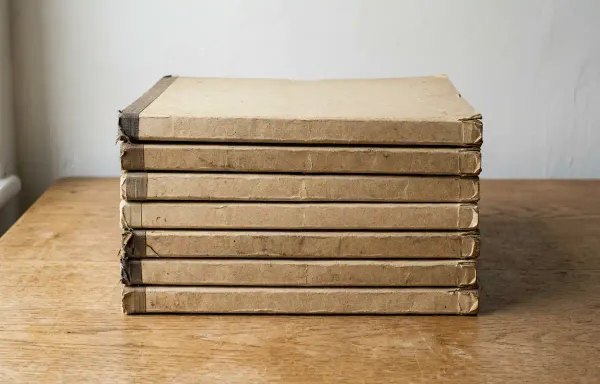
The Securitate, the Department of State Security, was, in proportion to population, among the largest secret police apparatuses in the Eastern bloc. At its height it employed some fifteen thousand officers and ran a network of roughly half a million informers, in a country of twenty-two million people. One in every forty-five Romanians, at any given moment, was filing reports. Across the four decades of the regime, historians estimate that as many as two million Romanians passed through the informer network at one time or another, an apparatus, in Dennis Deletant's assessment, second in scale only to the East German Stasi and the Soviet KGB. In the town of Sibiu, in the regime's final year, roughly one in six of the newly recruited informers was a child. The files the system produced now sit in a warehouse outside Bucharest, administered by the state institute that studies them. Laid end to end, they would stretch more than twenty-six kilometres.
I give the numbers because the numbers describe a cost structure, and the cost structure is the key to everything that follows.
Fear, as the communist states practised it, was expensive. It required salaries, fifteen thousand of them, plus the administrative apparatus above and beneath. It required the recruitment, handling, and payment-in-kind of half a million informers. It required transcriptionists for the tapped telephones, readers for the intercepted letters, analysts for the reports, warehouses for the files, guards for the warehouses. It required, in the end, twenty-six kilometres of paper. The state carried the entire weight of the fear it produced, the way a factory carries the cost of its machines.
And in exchange for that expense, the state received a specific product: fear with an address.
Everyone knew what was feared and where it lived. The Securitate had a name, a headquarters, a reputation, a knock. The informant in the building was a person, unidentified, but a person, singular, somewhere on your staircase. And because the fear had an address, it could be navigated. This is the part that people who did not live under such systems find hardest to understand, and it is the part that matters most for the comparison. My parents' generation developed an entire cartography of the fear. They knew which colleague could not be spoken to freely. They knew which rooms were safe and which were not. They knew that the kitchen table, with the radio turned up, was beyond the address's reach, not certainly, but probably, and probably was enough to build a private life on. The fear was total in ambition but bounded in practice, and inside its boundaries, people constructed the small unobserved spaces in which they remained people. The system was monstrous. It was also, in a strange and terrible way, legible. You knew who your enemy was. Your enemy had an office.
•••
Then I left, and I built an adult life in the democracies of Western Europe, and slowly, it took years, because the vocabulary was so different, I began to recognise the grammar.
The democracies I have lived in do not, in the main, operate a Securitate. What they operate instead is a fear that has been decentralised, broken out of the ministry and distributed across the whole surface of ordinary life, so thoroughly that most of the people administering it do not know they are administering anything.
Consider the inventory. There is economic fear: the job that can be lost, the debt that compounds, the rent that rises faster than the wage, the health coverage that, in the American case, dies with the employment, so that the employer holds not merely your income but your family's access to medicine. No commissar ever needed to visit a man who is three missed paycheques from losing his home; his compliance is structural, renewed every morning, self-enforcing.
There is social fear: the screenshot, the forwarded message, the recorded conversation, the human-resources interview in which you are invited, confidentially, of course, your candour appreciated, to report on the attitudes of a colleague. I have sat in that interview. I have written about the moment I recognised its texture: not the content, the texture, the same conversation I had been raised to fear, updated in vocabulary, identical in grammar. The workplace informant no longer reports to a ministry. He reports to a compliance function, and he is not paid for it, and he often believes he is doing good.
And there is directed fear, the fear manufactured and aimed. This publication has documented the mechanism at length: the architecture produces conditions of abandonment, refuses to address them, and then offers the abandoned a target, the migrant, the neighbour, the enemy within, so that the anger discharges sideways instead of upward. The fear of the foreigner, the fear of crime, the fear of the city, the fear of the other half of the country: none of this is spontaneous weather. It is cultivated, funded, and aimed, and it does the same work the Securitate's fear did, it keeps the population watching each other instead of watching the architecture.
Now observe the cost structure, because this is where the democratic model reveals its terrible elegance.
The Securitate needed half a million informers and paid, in favours and salaries and apartment allocations, for every one of them. The contemporary architecture gets its surveillance for free. The cameras are purchased by the surveilled, voluntarily, at retail. The tracking devices are carried in every pocket, their location services enabled by their owners. The informant network has no personnel budget because everyone has enrolled themselves, every doorbell that records the street, every platform that rewards the documentation of strangers, every screenshot filed away against future need. Ceaușescu's state spent itself into ruin partly to maintain twenty-six kilometres of files on twenty-two million people. The present architecture holds incomparably more information on all of us, and the subjects paid for the collection themselves, and would resist its removal.
Fear with an address was expensive and legible. Fear without an address is free and unnavigable. There is no office to avoid, no staircase informant to identify, no kitchen table beyond its reach, the phone is on the kitchen table. My parents could map the fear and live in its gaps. There are no gaps now. That is the trade the democracies made, mostly without noticing: they abolished the ministry and dissolved its function into the air.
•••
Here is where I must stop and say plainly what the two systems do not share, because the comparison is worthless, worse, it is actively harmful, if it is made dishonestly.
Under the system I was born in, people were tortured in cells for the content of their speech. Under the system I live in now, they are not. Under the first system, there were no courts worth the name; under the second, courts still rule against the government, regularly, and the government still, mostly, complies. Under the first system, elections were theatre; under the second, the President's party can lose a primary to a democratic socialist, which is, we should note, the very event that triggered the cancer speech. Under the first system, this piece could not have been written, and if written, not published, and if published, I would not have remained free, and neither would my family. I publish this piece under a name I chose, from a country I chose, and I expect no knock. That expectation is the whole difference. It is not a small difference. It is the difference for which people crossed minefields and died on border wires, and anyone who flattens it, from either political direction, is spending a currency they did not earn.
So no: the democracies do not rule by the Securitate's methods. The honest formulation is narrower and, I think, more disturbing. Both systems govern through fear. What differs is the architecture of delivery, and the direction of travel.
•••
Because the systems are not standing still. They are converging, and the convergence is the reason this piece exists now rather than as a memoir.
The convergence has two arms. The first happened in my lifetime and is barely remarked upon: after 1989, the East adopted the West's fear. Romania dismantled the Securitate and received, in the space of a decade, the full democratic inventory, the precarious job, the compounding debt, the emigration of a fifth of its population in search of wages, the directed fears of its own new tabloid politics. The address was demolished; the fear was privatised. Anyone who goes back, as I do, can watch both inheritances operating in the same streets.
The second arm is the one happening this month, and it is the West adopting the East's.
Consider what the recent weeks have actually contained, each item documented, most of them covered in this publication as they occurred. A President describing domestic opponents as a cancer requiring excision, and the political tendency they represent as a greater threat than the wars that killed six hundred thousand Americans. A White House that internally debated, the reporting is the New York Times', suspending habeas corpus, the protection against arbitrary detention, an instrument touched four times in American history and only once since 1900; the debate concluded against, this round, and the fact of the debate is the news. More than two hundred people killed by military strikes on boats, without charge, trial, congressional authorisation, or so much as a published list of their names. Federal agents conducting mass arrests with their faces masked, the mask being the precise, physical opposite of an address. An intelligence community placed under a loyalist whose documented qualification for the role is that he used a federal database to generate criminal referrals against the President's opponents by name, and who, within seventy-two hours of appointment, had purged the office's leadership. And now, at the anniversary of the founding, the open revival of the enemy-within vocabulary, aimed at a domestic political tendency, with the stated remedy of surgical removal.
Read that inventory with Eastern eyes and the pattern identifies itself. The enemy within, named from the highest podium. The protections against arbitrary detention, moved from the category of the untouchable to the category of the debatable. The extrajudicial dead, uncounted. The agents, masked. The security service, personalised. Item by item, fear is reacquiring an address in the West, the address is being announced from beneath Washington's face on a mountain, while retaining every instrument of the decentralised model it built over the past half century. The doorbell cameras are not being uninstalled because the enemy-within speeches have begun. The two systems are not exchanging places. They are being combined.
That is the genuinely new thing, and I want to name it exactly. My parents faced fear with an address and built their lives in its gaps. My neighbours in the West faced fear without an address and lost the gaps but kept the courts, the elections, the expectation of no knock. What is being assembled now, in the world's oldest democracy, in plain view, is a system with the reach of the second and, increasingly, the aim of the first: universal, self-funded, voluntary surveillance, pointed, by name, from a podium, at the enemy within. The Securitate never dreamed of such an instrument. It could not have afforded it. No state could. The citizens had to build it themselves, and they have, and now a man who speaks of cancers is being handed the switch.
•••
I said at the outset that the inheritance teaches you to recognise fear-based rule by its texture rather than its flag, and I want to end with the texture, because the texture is where I actually live.
It is in the American friend who now hesitates, I hear the hesitation, I was raised on that exact pause, before finishing a sentence about politics in a restaurant. It is in the colleague who asks to switch to a different app, the one with the disappearing messages, before continuing. It is in the researcher who quietly scrubs a decade of posts before a visa renewal; in the civil servant who assumes every workplace conversation is reported by someone, she just doesn't know whom; in the ordinary people at the town meeting who have begun, without coordinating it, to leave their phones in the car. None of these people has been arrested. Almost none of them will be. That is not the point, and it was never the point in Bucharest either, the Securitate's half million informers did not need to arrest twenty-two million people. They needed twenty-two million people to behave as if. The behaving-as-if is the product. The arrests are merely the advertising.
And the behaving-as-if has begun. I recognise it the way you recognise a smell from childhood, involuntarily and completely. The small hesitations. The turned-up radio, in its new forms. The private cartographies being drawn again, which colleague, which room, which app. People are relearning, in free countries, the skills my parents hoped their children would never need, and they are relearning them fast, because the skills were only ever one generation deep in the ground.
I was taught to be careful what I said. I have spent my adult life learning to speak freely, and I have built everything I have on the difference between the two conditions.
So when I tell you that the texture is returning, I am not making a historical analogy. I am filing a report from inside both systems, the one that made me careful, and the one that taught me not to be, as the second one begins, sentence by sentence, speech by speech, database by database, to rhyme with the first.
The fear is not coming back.
The fear never left. It changed its address.
And now it is changing it again.
F.A.Q.
What is the article about?
Is the article claiming the United States is like Ceaușescu's Romania?
What was the Securitate and what are the figures the article uses?
What does 'fear with an address' versus 'fear without an address' mean?
What is the convergence the article describes?
Is the article alarmist or predicting a purge?
Is the article anti-communist propaganda, or does it minimize Western harms?
Does the article endorse the President's claims about a communist menace?
What does the article propose?
A. Kade writes The Kade Frequency, an investigative publication on institutional power, financial capture, and the long project of making democracy something real.
No sponsors. No filters. No propaganda.
•••
Sources and references
The July 3-4, 2026 speeches: the Mount Rushmore remarks, communism as a greater threat than the world wars, Pearl Harbor, or 9/11, and the characterisation of the Communist Party's membership, and the National Mall remarks of July 4, including the "cancer" formulation, were reported across the American and international press on July 4-5, 2026, with the democratic socialist primary victories in New York and Colorado widely identified as the proximate trigger.
The Securitate: the figures, some fifteen thousand officers and roughly half a million informers at the apparatus's height, in a population of twenty-two to twenty-three million, are the standard scholarly estimates, documented in Dennis Deletant, Ceaușescu and the Securitate: Coercion and Dissent in Romania, 1965-1989, and in the holdings of the National Council for the Study of the Securitate Archives (CNSAS), whose files extend more than twenty-six kilometres. Deletant's estimate that as many as two million Romanians passed through the informer network across the regime's duration, and his ranking of the apparatus behind only the Stasi and the KGB, are from the same work. The Sibiu child-informer figures were unearthed by the historian Marius Oprea and are documented by the Wilson Center. Lavinia Stan's scholarship on the informer network and the archive is the standard reference on the files themselves.
The contemporary inventory: the White House's internal debate over suspending habeas corpus and invoking the Insurrection Act was reported by the New York Times in June 2026; habeas corpus has been suspended four times in United States history, three of those before 1900. The count of more than two hundred people killed in US military strikes on boats in the Caribbean and Eastern Pacific, without charges, trials, or congressional authorisation, is drawn from the cumulative reporting of NPR and others through June 2026. The appointment of the FHFA director as Acting Director of National Intelligence, his documented use of the agency's mortgage database for criminal referrals against the President's political opponents, the GAO investigation, and the personnel purge of his first seventy-two hours are documented in this publication's piece The Loyalist and in the CNBC, NBC News, and NPR reporting of June 2026, along with the formal warning letter of Senators Warner and Himes. The masked-agent arrest practices and enforcement quotas have been documented across the American press through the spring and summer of 2026.
The personal material, the Romanian inheritance, the workplace interview, the texture, is the author's own, and is developed at greater length in the letter "I Was Taught to Be Careful What I Said," published on Medium in June 2026.
The piece's central analytical claim, that fear-based governance is common to both systems and that the difference lies in the architecture of delivery, with the two architectures now converging, is the piece's own. The facts on which it rests are in the public record and the archives, twenty-six kilometres of them.
By the same author
Two books in restrained literary nonfiction
A. Kade's companion volumes, a meditation on thinking and character, and a meditation on love, real and imagined.
View the books →