Who has a plan?
Which world leaders have a vision for the future? Xi, MBS, and Singapore build. Trump tweets. Europe writes reports. The century belongs to whoever shows up.

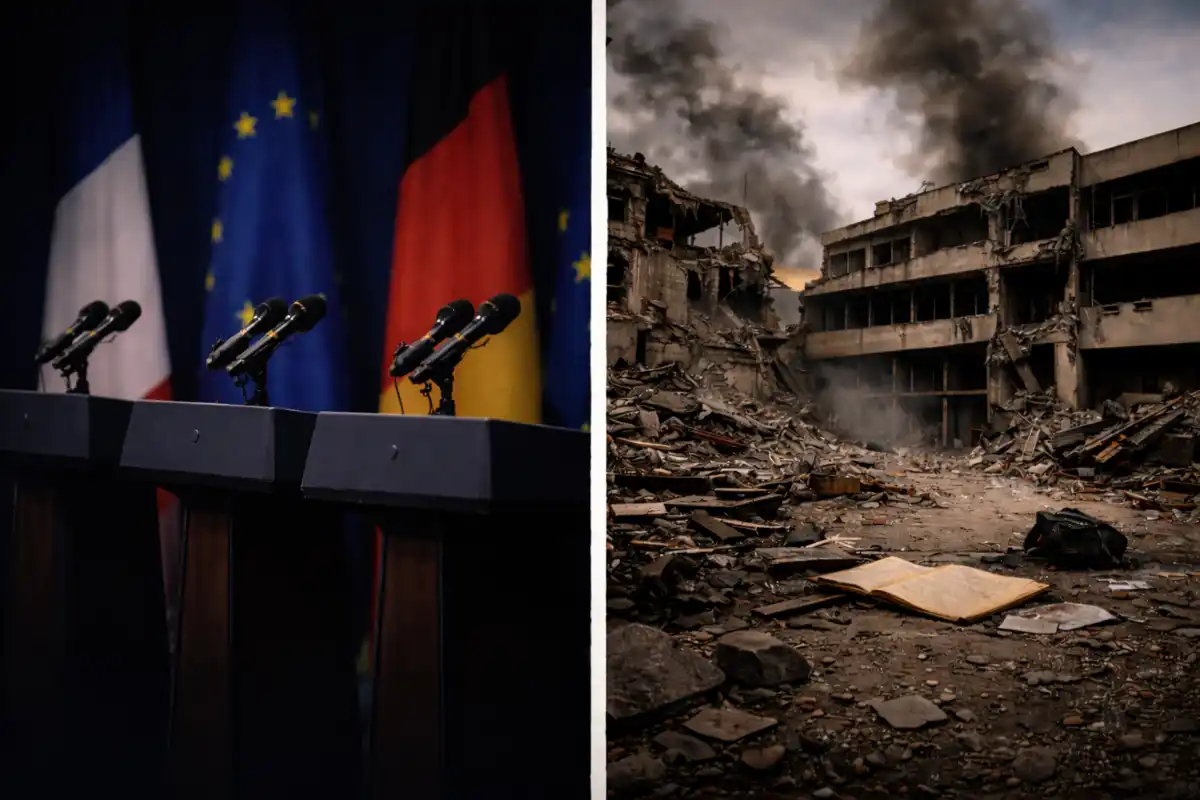
"Where are we going?" Ask the leaders of the Western world and you'll get slogans. Ask a few others and you'll get blueprints. The difference will define the century.
Here's a simple question: What is the plan?
Not the talking points. Not the campaign slogan. Not the culture war grievance of the week. The actual plan. Where is your country supposed to be in twenty years? What industries will employ your children? How will your cities get power? What role will your nation play in the world?
Ask this question of most Western leaders and watch them stammer. They don't have a plan. They have a re-election strategy. They have polling data. They have consultants who tell them which emotions to trigger. But a vision for the future? A roadmap to get there? That's not on the agenda. The agenda is surviving the next news cycle.
And then there are the others.
The Architects
Say what you want about Xi Jinping, and there's plenty to say, but the man has a plan. Made in China 2025. The Belt and Road Initiative. The energy transition. Semiconductor self-sufficiency. Every move connects to a larger strategy. Every investment serves a thirty-year timeline.
China is building high-speed rail through mountains while Americans argue about whether climate change is real. China is locking up lithium supplies in Africa and South America while European governments debate the font on recycling pamphlets. This isn't because China is morally superior, it absolutely isn't, but because its leadership operates on a different timescale than electoral democracies that can't see past the next polling date.
The Gulf states have plans. Mohammed bin Salman's Vision 2030 is openly available to read. You can agree or disagree with it. You can point out its contradictions, and there are many. But it exists. Saudi Arabia is building a post-oil economy while it still has oil money to spend. The UAE is positioning itself as a logistics, finance, and tech hub while diversifying away from petroleum. These are nations that looked at the future, saw the end of the oil age coming, and started building something else.
Singapore has a plan. It always has. A city-state with no natural resources that became one of the wealthiest places on Earth didn't get there by accident. Water security. Education pipelines. AI and biotech investments. Climate adaptation. Every policy connects to the next.
India has something resembling a plan, industrial policy, infrastructure investment, a demographic dividend to leverage while it still can. It's messier than China's model, complicated by democracy's inefficiencies, but at least there's a direction of travel.
The irony is that Western democracies used to be the ones with plans. The Marshall Plan. The Interstate Highway System. NASA's moon shot. The EU's original architects had a vision that stretched across decades. Something happened. Planning became unfashionable. The market would handle everything. Government's job was to get out of the way.
So now the market handles things. And the market's plan is to extract maximum value in the next quarter.
The Drift
What is America's plan?
Under Trump, the answer is apparently: tariffs, grievance, and "greatness", a word that means whatever the listener wants it to mean. There is no industrial policy. There is no infrastructure vision beyond tweets. There is no coherent energy strategy, simultaneously bragging about oil production while occasionally mentioning coal, a fuel source the market already killed. The plan is chaos. The plan is strongman theater. The plan is keeping the base angry enough to vote.
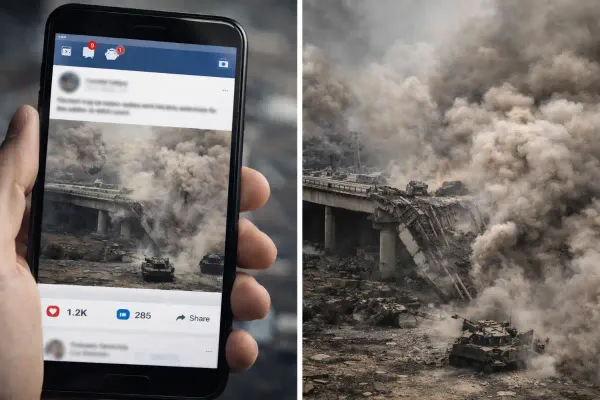
And when you don't have a plan, you end up announcing blockades via social media while your adversaries methodically execute their thirty-year strategies.
The truth doesn't trend. It survives because a few still care enough to keep it alive.
Keep The Kade Frequency transmitting.
What is Britain's plan? Brexit happened. Now what? Nobody knows. The country extracted itself from the largest trading bloc on Earth with no clear vision of what it would become instead. A Singapore-on-Thames? An Atlantic bridge? A heritage theme park? Five years on, the answer remains: we're figuring it out. Which means there is no answer.
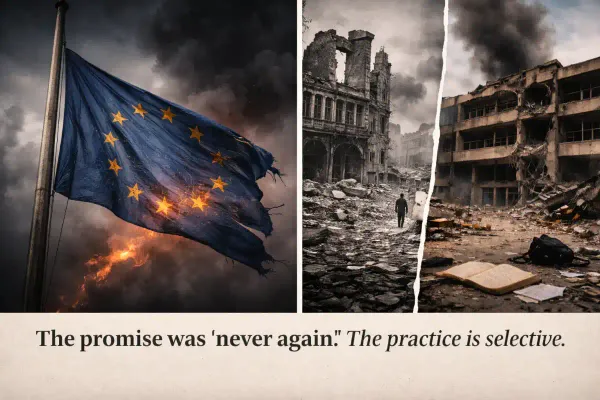
What is Europe's plan? Managed decline, mostly. Some climate targets that may or may not survive contact with reality. An industrial base bleeding to China and America. A defense policy that consists of hoping the Americans stay interested. The EU's greatest strength, careful, incremental consensus-building, has become its greatest weakness in an era that rewards speed and vision.
Germany had a plan. It was called cheap Russian gas plus Chinese export markets. Both pillars collapsed. Now what? Nobody knows.
France tries harder than most. Macron at least talks about European sovereignty and strategic autonomy. But talking isn't building, and France alone can't drag a continent that prefers comfortable decline.
The War as Symptom
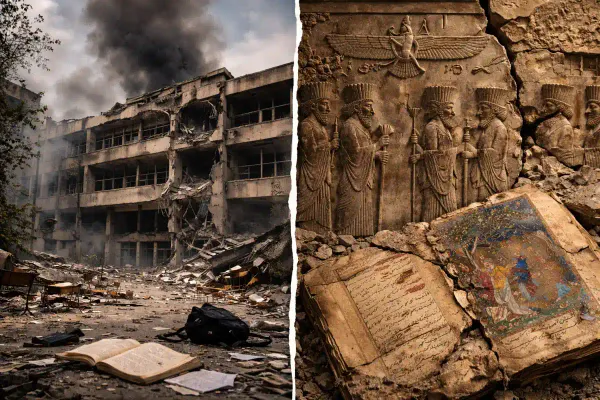
The Iran war is what happens when you have no plan.
What was the objective? "Stopping them from getting nuclear weapons." And then? What's the day after? What's the end state? What does Iran look like in 2030, and what role does America play there? Nobody in Washington can answer these questions because nobody in Washington has asked them.
Netanyahu has no plan. His plan is permanent war, because permanent war keeps him in power and out of prison. There is no vision for Gaza. No vision for the West Bank. No vision for Lebanon. No day-after. Just more war, forever, because the alternative is facing what Israel has become.
Trump has no plan. His plan is "maximum pressure", a phrase borrowed from the last failed Iran strategy, plus military threats on social media, plus whatever Fox News suggests that morning. He could "take out Iran in one day." And then what? Seventy million people, mountainous terrain, regional allies, and no occupation force in history has successfully held it. The day after isn't his problem. The day after is someone else's inheritance.
The ceasefire failed because neither side has a vision for peace. They only have demands for surrender.
Why Plans Disappeared
Democratic politicians stopped planning because planning is risky. Plans can fail visibly. Plans can be attacked. Plans require admitting that the present is inadequate. It's much safer to manage perceptions than to manage reality.
Corporate money poisoned the well. Long-term planning threatens short-term profits. A politician who wants to rebuild domestic industry threatens companies that offshore for margins. A politician who wants to break up monopolies threatens donors. So politicians stopped wanting things that matter.
Media fragmentation killed attention spans. You can't build public support for a twenty-year infrastructure plan when the news cycle is twenty minutes. So, politicians stopped proposing things that can't be explained in a tweet.
And voters, this is the uncomfortable part, voters rewarded it. Voters chose the strongman over the technocrat, the slogan over the strategy, the vibes over the vision. It feels better to be angry than to be patient. It feels better to blame than to build.
The Consequences
Countries without plans don't disappear. They decay. They become dependent on countries that do have plans. They find themselves reacting instead of acting, managing crises instead of preventing them, fighting over a shrinking pie instead of baking a larger one.
The United States is still the world's largest economy and most powerful military. But it's coasting on infrastructure built by previous generations, research funded by previous administrations, institutions designed by people who are dead. The inheritance is being spent. And nothing is being planted for the next generation to harvest.
Europe is still wealthy, still comfortable, still convinced that the postwar order will somehow continue despite every sign that it won't. The Draghi Report spelled it out clearly: compete or decline. Europe chose to write another report.
Britain is discovering that sovereignty means nothing if you don't know what to do with it. All that effort to take back control, control to do what, exactly?
Meanwhile, China builds. The Gulf builds. Singapore builds. India builds. They make mistakes, certainly. Their plans are flawed. Some will fail. But they are trying to shape the future rather than merely survive the present.
What Would It Take?
The West could still build plans. The capacity isn't gone, it's dormant. The United States built the atomic bomb, won the space race, and created the internet. European nations rebuilt from rubble after 1945. The talent exists. The resources exist. What's missing is the will.
It would require political leaders who accept short-term pain for long-term gain, a rare species in electoral democracies. It would require voters who reward patience over outrage. It would require media that covers policy as seriously as it covers scandal. It would require breaking the donor class's grip on political agendas.
None of this is impossible. All of it is unlikely.
So the drift continues. The West argues about pronouns while China builds ports. America announces blockades via Truth Social while the Belt and Road extends across continents. Europe writes reports about the need for reports.
And the world's center of gravity keeps shifting toward those who know what they want.
The Leaders With a Future
The next century belongs to whoever builds it. Not whoever talks about greatness while the roads crumble. Not whoever manages decline gracefully. Not whoever wins the news cycle while losing the decade.
Xi has a plan. MBS has a plan. Modi has a plan. Singapore has always had a plan.
Trump has a truth social account. Europe has process. Britain has nostalgia.
This is not a moral judgment. Having a plan doesn't make you good. China's plan involves concentration camps. Saudi's plan involves bone saws. Singapore's plan involves restrictions on liberty that Westerners would never accept.
But it is a prediction. The future belongs to those who show up with blueprints. The rest will be tenants in a world designed by others.
So, when you watch Trump announce another policy via social media, or watch European leaders issue another statement of concern, or watch British ministers blame Brussels for problems they own, ask the question:
Where are we going?
If they can't answer, they're not leading. They're just holding the wheel while the car rolls downhill. And somewhere in Beijing, in Riyadh, in Singapore, people with plans are watching the decline and building faster.
- A. Kade
The Kade Frequency, No sponsors, no filters, no propaganda.
Independent investigations. Imperial expansion exposed. Pattern documented.
Get investigations delivered.