Two Empires, One Playbook: Russia and America's Identical Wars
Russia invaded Ukraine. America invaded Iran. Both claimed self-defense. Both killed civilians. The only difference is which empire's news you watch.

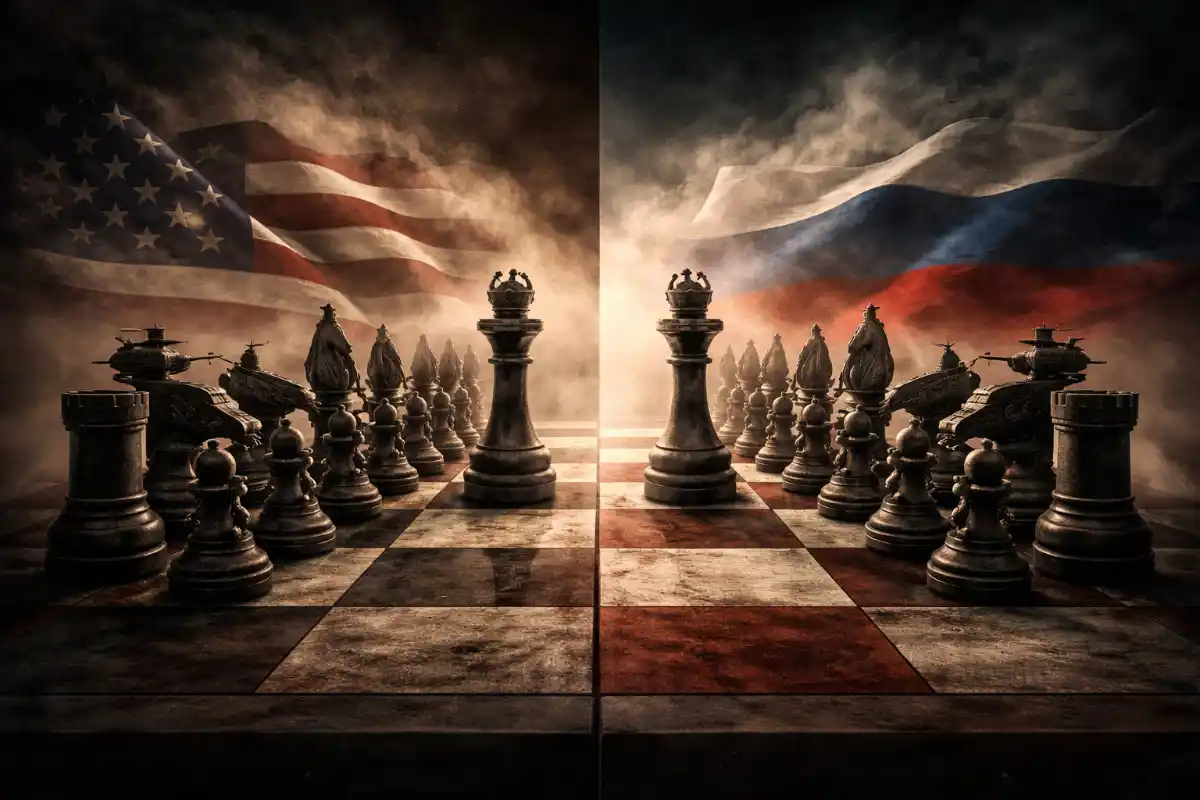
Russia invaded Ukraine. America invaded Iran. Both claimed self-defense. Both cited existential threats. Both killed civilians and called it something else. The only difference is which empire's news you grew up watching.
In 416 BC, Athens sent warships to the island of Melos. The Melians were neutral in the war between Athens and Sparta. They had done nothing wrong. They posed no threat. The Athenian generals didn't care.
When the Melians asked why Athens had the right to attack them, the Athenians replied with words that have echoed through 2,500 years of human history: "The strong do what they can and the weak suffer what they must."
The Melians refused to surrender. Athens besieged them, executed every man, and sold the women and children into slavery. Thucydides recorded the dialogue because he understood something about power that we pretend not to know: empires don't need reasons. They need capability. The reasons come later.
Two and a half millennia later, nothing has changed. The rhetoric has evolved. The justifications have become more sophisticated. The weapons have become more precise. But the fundamental dynamic remains exactly what it was when Athenian ships appeared on the Melian horizon: powerful states do what they want, and the rest of the world either submits or suffers.
Russia knows this. America knows this. The only people who don't know this are the ones still believing in a "rules-based international order" that exists only for the weak.
The Defensive War
Every empire claims self-defense. Every invasion is a preemptive strike against an existential threat. Every massacre is a regrettable necessity forced by the enemy's intransigence.
Russia invaded Ukraine in February 2022. The justification? NATO expansion was an existential threat to Russian security. Ukraine was being used as a Western proxy. Neo-Nazis had infiltrated the government. Russia had no choice but to launch a "special military operation" to protect the Russian-speaking population of Donbas and "denazify" the country.
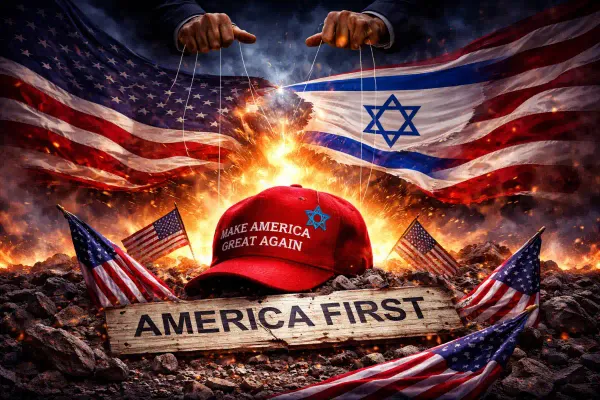
America invaded Iran in February 2026. The justification? Iran's nuclear program was an existential threat to regional security. Iran was the world's leading state sponsor of terrorism. The regime had been destabilizing the Middle East for decades. America had no choice but to launch "major combat operations" to eliminate the threat and support its ally Israel.
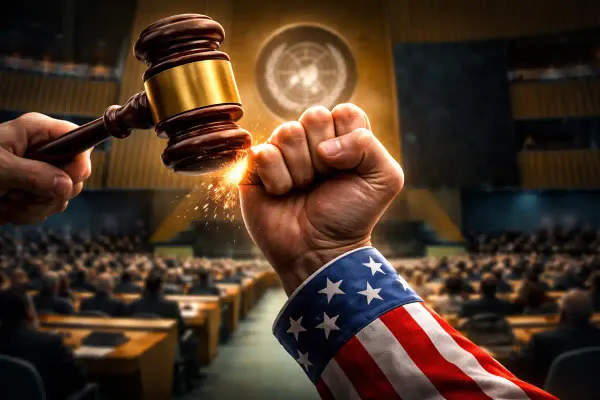
Notice the pattern. Both invasions came without UN authorization. Both were launched against nations that had not attacked the aggressor. Both relied on threat inflation and selective intelligence. Both were sold to domestic audiences as defensive measures against an enemy that left them no choice.
The rhetoric is interchangeable. Swap "NATO expansion" for "Iranian nuclear program." Swap "denazification" for "counterterrorism." Swap "protecting Russian speakers" for "protecting Israel." The script is identical. The only variable is the flag on the tank.
The Body Count
Let's talk numbers.
In Ukraine, after three years of war, the UN has verified approximately 13,000 civilian deaths. The actual toll is certainly higher, perhaps 15,000 to 20,000. Russian military casualties are estimated at 1.2 million killed and wounded, including up to 325,000 dead. Ukrainian military casualties are estimated at 500,000 to 600,000. The war has displaced over 10 million Ukrainians, nearly a quarter of the pre-war population.
In Iraq, America's 2003 invasion and subsequent occupation killed somewhere between 185,000 and 210,000 Iraqi civilians according to the Iraq Body Count project's documented deaths. The Lancet studies suggested the true toll was far higher, potentially 600,000 or more excess deaths by 2006 alone. The Costs of War project at Brown University estimates that America's post-9/11 wars killed over 940,000 people directly and contributed to 3.6 to 3.8 million indirect deaths.
In Iran, three weeks into America's 2026 war, more than 2,500 people are already dead across the region. The Iranian Red Crescent reports over 1,444 confirmed dead in Iran alone, with 18,000 civilians injured. Over a million Lebanese have been displaced. The war is just beginning.
By any objective measure, America's wars have killed more civilians than Russia's. Iraq alone dwarfs Ukraine. Add Afghanistan, Libya, Syria, Yemen, where American weapons and support enabled Saudi Arabia's bombing campaign, and the comparison isn't even close.
Yet somehow, in Western discourse, Russia is the uniquely barbaric aggressor while America conducts "precision strikes" and "surgical operations." The dead Iraqis, the dead Afghans, the dead Yemenis, they're footnotes. Regrettable but necessary. The cost of maintaining order. The price of freedom.
- Thucydides, 416 BC
The Rules That Don't Apply
Both empires invoke international law when it suits them and ignore it when it doesn't.
Russia violated Ukraine's sovereignty by invading without UN authorization. This is a clear breach of the UN Charter, specifically Article 2(4), which prohibits the use of force against the territorial integrity of any state. The International Criminal Court issued an arrest warrant for Vladimir Putin. The world condemned Russia as a pariah state.
America violated Iraq's sovereignty by invading without UN authorization. This was a clear breach of the same article of the same charter. No arrest warrants were issued. No sanctions were imposed. The world watched America hang Saddam Hussein and install a new government, and the "international community" said nothing that mattered.
America never joined the International Criminal Court. When the ICC attempted to investigate American war crimes in Afghanistan, the United States sanctioned the prosecutors. When the ICC issued arrest warrants for Israeli officials, America sanctioned the judges. The message is clear: international law applies to everyone except us and our friends.
Russia at least has the honesty of a gangster. It doesn't pretend to believe in rules it has no intention of following. America maintains the fiction of a "rules-based international order" while systematically exempting itself from every rule that might constrain its power. Which is more contemptible, the honest brute or the pious hypocrite?
The Compliant Media
Both empires have media ecosystems that frame their wars as necessary and just.
In Russia, state media presents the invasion of Ukraine as a defensive operation against NATO aggression and Ukrainian fascism. Russian casualties are minimized. Ukrainian resistance is portrayed as Western-backed terrorism. Alternative narratives are suppressed. Critics are silenced, jailed, or worse.
In America, corporate media presents the invasion of Iran as a defensive operation against Iranian aggression and terrorism. American casualties are mourned extensively. Iranian civilian deaths are mentioned briefly, if at all. Critics are marginalized as unpatriotic or naive. The frame is always: America had no choice.
The mechanisms differ. Russia uses state censorship. America uses market concentration and access journalism. Russian propagandists are government employees. American propagandists are "national security correspondents" who launder Pentagon talking points through prestigious mastheads. But the result is the same: a population that believes its empire's wars are righteous while the enemy's wars are criminal.
When Russia bombs a hospital, it's a war crime. When America bombs a hospital, as it did in Kunduz, Afghanistan, in 2015, killing 42 people including patients and Doctors Without Borders staff, it's a "tragic mistake." When Russian soldiers commit atrocities, they're evidence of Russian barbarism. When American soldiers commit atrocities, Abu Ghraib, Haditha, the Mahmudiyah rape and killings, they're "bad apples" who don't reflect American values.
The language is weaponized. "Invasion" becomes "intervention." "Occupation" becomes "liberation." "Civilian casualties" become "collateral damage." The euphemisms serve the same function in both empires: to make the killing palatable to the population whose taxes fund it.
The truth doesn't trend. It survives because a few still care enough to keep it alive.
Keep The Kade Frequency transmitting.
The Sanctions Double Standard
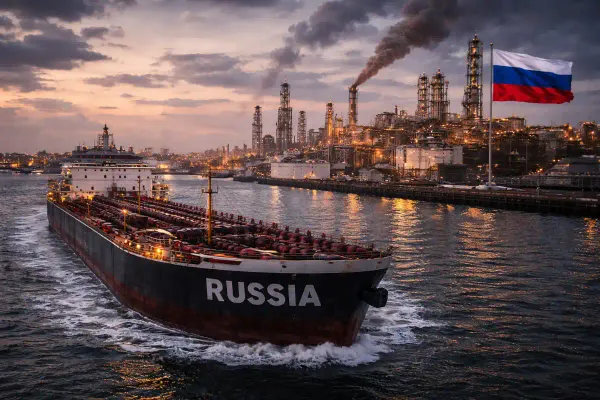
When Russia invaded Ukraine, the West responded with the most comprehensive sanctions regime in history. Russian banks were cut off from SWIFT. Russian oligarchs had their yachts seized. Russian athletes were banned from international competition. Russian cultural figures were disinvited from Western stages. The Russian economy was to be "ruined," in the words of German Foreign Minister Annalena Baerbock.
When America invaded Iraq, there were no sanctions. When America invaded Afghanistan, there were no sanctions. When America bombed Libya into a failed state, there were no sanctions. When America supported Saudi Arabia's devastating war in Yemen, there were no sanctions.
When America invaded Iran in 2026, Spain denied American use of its military bases. Trump threatened Spain with an embargo. That's how the "rules-based order" works: obey or be punished. The rules are for the ruled, not the rulers.
The Global South sees this clearly. When Western leaders invoke the "rules-based international order" to condemn Russia, much of the world hears hypocrisy. They remember Iraq. They remember Libya. They remember decades of American interventions that violated the same principles now being invoked to isolate Moscow. They see a system that punishes some violations while rewarding others based solely on who commits them.
This is why so many countries refused to sanction Russia. Not because they support the invasion of Ukraine, most don't, but because they recognize that Western outrage is selective. The rules apply when America's enemies break them. They vanish when America or its allies do the same.
The Existential Threat
Both empires frame their wars as responses to existential dangers that left them no choice but to act.
Russia claims NATO expansion to its borders represents an existential threat. The logic: a hostile military alliance moving ever closer, incorporating former Soviet states, potentially deploying weapons that could strike Moscow in minutes. Whether or not this justifies invasion, the concern is at least geographically coherent. NATO is, in fact, closer to Russia than it was in 1991.
America claims Iran's nuclear program represents an existential threat. But Iran has no nuclear weapons. The IAEA has repeatedly confirmed Iran's compliance with monitoring. Just days before America launched its attack, Oman's foreign minister announced a "breakthrough", Iran had agreed to halt uranium enrichment and accept full IAEA verification. The "existential threat" was on the verge of being resolved through diplomacy.
America attacked anyway.
The Iraq War provides the template. The threat of Iraqi weapons of mass destruction was fabricated. The intelligence was fixed around the policy. Colin Powell presented false evidence to the UN. The war happened because powerful people wanted it to happen, and the "threat" was manufactured to justify what had already been decided.
Russia lies about the threat from Ukraine. America lies about the threat from Iran. Both empires lie because the truth would not justify what they want to do. The truth is that powerful states attack weaker states when they calculate they can get away with it. The "threats" are post-hoc rationalizations, not genuine motivations.
The Athenian Lesson
Thucydides recorded the Melian Dialogue not to celebrate Athenian power but to document its corruption. The dialogue is a tragedy. The Athenians win, but in winning, they reveal the moral bankruptcy at the heart of their empire.
And here's the part they don't teach in international relations seminars: Athens lost.
Just a few years after destroying Melos, Athens launched a disastrous expedition to Sicily. The fleet was annihilated. Tens of thousands of soldiers died or were enslaved. The empire never recovered. Within a decade, Sparta had won the war and Athens was stripped of its walls, its fleet, and its power.
Empires that live by the sword die by the sword. Not immediately, there's often a lag, but eventually. The contempt for rules, the addiction to force, the belief that might makes right: these things corrode an empire from within while generating enemies without. The Melians were just one small island. But the lesson of Melos, that Athens would destroy anyone who defied it, did not cow Athens' enemies. It united them.
Russia is learning this in Ukraine. Three years in, with over a million casualties, Russia has gained less than 1% of Ukrainian territory since January 2024. The war that was supposed to take three days has become a bleeding wound that may never heal. The sanctions that were supposed to be absorbed have crippled the Russian economy. The isolation that was supposed to be temporary has become permanent.
America has not yet learned this lesson. The Iran war is three weeks old. The bill hasn't come due. But it will. Oil at $115 a barrel. European gas prices doubled. Global food prices spiking. Hormuz closed. The world economy disrupted. And for what? To destroy a threat that was being resolved through diplomacy? To satisfy Benjamin Netanyahu's thirty-year obsession?
Empires don't fall because they run out of enemies. They fall because they run out of friends, and out of money, and out of the moral authority that makes others want to follow rather than merely fear them.
The Honest Truth
Here's what nobody in power will say: Russia and America are both empires. They both operate by the logic of empire. They both believe, at the core of their foreign policy establishments, that the strong do what they can and the weak suffer what they must.
The difference isn't moral. The difference is power and geography and history and the accident of which side of which border you happened to be born on.
If you grew up in America, you were taught that American power is benevolent. American wars are just. American mistakes are aberrations that don't reflect American values. You were taught to see Russian aggression as uniquely barbaric while American aggression was regrettable but necessary.
If you grew up in Russia, you were taught the mirror image. American power is malevolent. NATO expansion is aggression. American interventions are imperialism. Russian actions are defensive responses to Western encirclement.
Both narratives are propaganda. Both contain elements of truth. Both obscure the deeper reality: that great powers do what great powers do, and the justifications are retrofitted to the actions, not the other way around.
The "rules-based international order" is a fiction. It has always been a fiction. The rules bind the weak. The strong exempt themselves. This is not cynicism, it's observation. Every war America has fought since 1945 has confirmed it. Every Russian intervention has confirmed it. The UN Security Council, with its veto powers, was designed to ensure that great powers could never be constrained by international law. It works exactly as intended.
The honest position is not that Russia is right or that America is right. The honest position is that both are empires, both operate by imperial logic, and both will continue to do so until they are no longer strong enough to impose their will.
What Changes Nothing
This article will change nothing. The people who need to read it won't. The people who read it already know. The wars will continue. The propaganda will continue. The double standards will continue.
Iran will be destroyed, or it won't. Ukraine will be partitioned, or it won't. Millions more will die, or they won't. The decisions will be made by powerful people in powerful countries, and the rest of the world will suffer what they must.
But there's value in naming the thing. There's value in refusing the euphemisms. There's value in saying, clearly and without equivocation: what America is doing in Iran is what Russia is doing in Ukraine. The scale differs. The justifications differ. The outcome may differ. But the fundamental act, a powerful nation attacking a weaker nation because it can, is identical.
If Russia is a pariah for Ukraine, America should be a pariah for Iran. If Putin is a war criminal, so are the architects of Iraq. If Russian propagandists are liars, so are the "national security reporters" who transcribe Pentagon press releases without skepticism.
The Melians asked the Athenians: "Is that your idea of equity, to put those who have nothing to do with you in the same category as peoples that are most of them your own colonists?"
The Athenians replied: "As far as right goes, one has as much of it as the other."
That's the truth. That's always been the truth. The rules-based order is a lie. The strong do what they can. The weak suffer what they must. The only question is which empire you're rooting for — and whether you have the honesty to admit that your empire is an empire too.
Independent investigations. Imperial expansion exposed. Pattern documented.
Get investigations delivered.
Frequently Asked Questions
How do Russia's and America's war justifications compare?
Both empires claim self-defense against existential threats. Russia cited NATO expansion and Ukrainian "neo-Nazis." America cited Iran's nuclear program and terrorism. Both invaded without UN authorization. Both attacked nations that had not attacked them. The rhetoric is interchangeable, only the flags differ.
How do civilian casualties in American wars compare to Russia's war in Ukraine?
The Iraq Body Count documents 185,000-210,000 Iraqi civilian deaths. The Lancet studies suggested 600,000+ excess deaths by 2006 alone. Brown University's Costs of War project estimates over 940,000 direct deaths from post-9/11 wars. In Ukraine, the UN has verified approximately 13,000 civilian deaths over three years. By body count, American wars have killed far more civilians.
Why wasn't America sanctioned for invading Iraq like Russia was sanctioned for Ukraine?
The "rules-based international order" applies rules selectively. America controls the financial infrastructure (dollar, SWIFT) used to enforce sanctions. America has veto power at the UN Security Council. America never joined the International Criminal Court and sanctions its prosecutors. The rules bind the weak; the strong exempt themselves.
What is the Melian Dialogue and why is it relevant?
In 416 BC, Athens demanded the neutral island of Melos surrender or be destroyed. When Melians asked for justification, Athenians replied: "The strong do what they can and the weak suffer what they must." Athens destroyed Melos. This 2,500-year-old dialogue remains the foundational text of political realism, and describes how both Russia and America operate today.
What is the "rules-based international order"?
A post-WWII system of international law and institutions theoretically governing relations between states. In practice, it's a fiction: great powers exempt themselves through UN veto power, non-participation in international courts, and control of financial systems. The rules apply to weak states; powerful states do what they want.