The Banality of Evil
Trump posted a video of a bridge collapsing. Eight people dead. Ninety-five wounded. They were celebrating a holiday underneath it. "Much more to follow!" he wrote. Like a movie trailer. Like a teaser for the next episode. And we scrolled past it. This is what we've become. Not monsters. Worse.
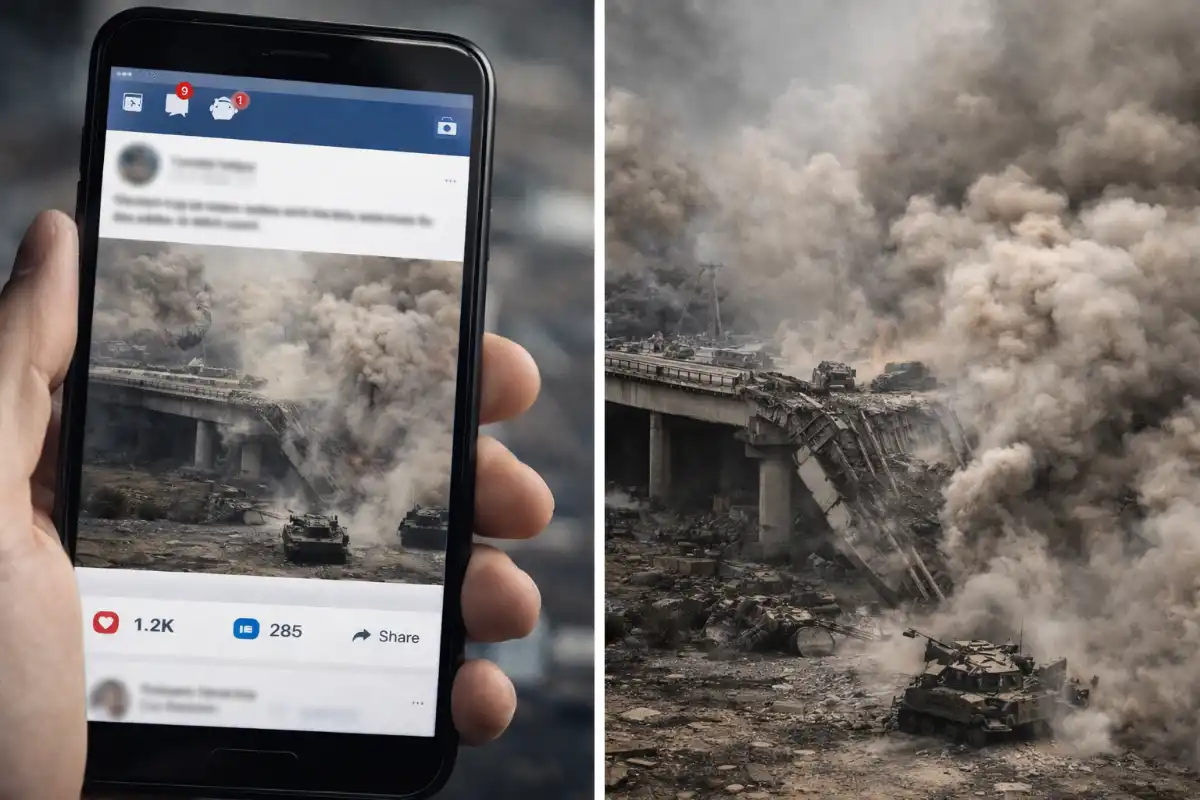
Trump posted a video of a bridge collapsing. Eight people dead. Ninety-five wounded. They were celebrating a holiday underneath it. Families. Children. Picnics by the river.
"Much more to follow!" he wrote.
Like a fucking movie trailer. Like a teaser for the next episode of a show, we can't stop watching.
And we scrolled past it.
This is what we've become.
Not monsters. Worse. Audiences.
We watch wars like television. We consume atrocities like content. We check the death toll the way we check the weather, briefly, casually, before moving on to something that matters more to us.
What matters more to us? Everything. Anything. A game. A meme. The next notification. The endless scroll.
2,076 dead in Iran. 26,500 wounded. 600 schools destroyed. A pilot missing, hunted by a nation offering cash rewards for his capture.
And what do we do?
We like. We share. We form opinions. We argue in comments with strangers we'll never meet about horrors we'll never feel. Then we order dinner.
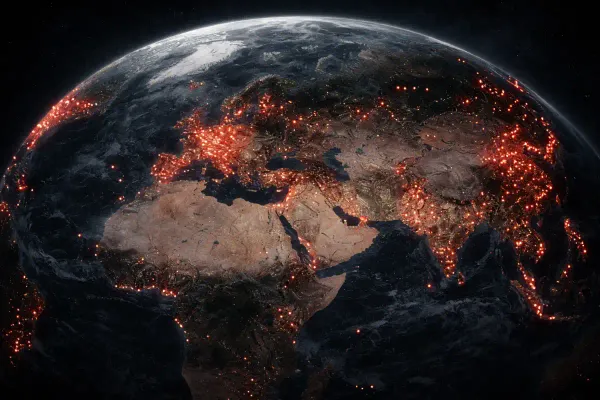
The blood dries on foreign streets. The algorithms keep feeding. The scroll never stops.
The Clerk of Genocide
Hannah Arendt coined the phrase for Adolf Eichmann. The Nazi who organized the trains to Auschwitz. She expected a monster when she walked into that Jerusalem courtroom. A demon. Something recognizably evil.
She found a bureaucrat.
A man who followed orders. Filed paperwork. Optimized logistics. Made the trains run on time to the death camps. Then went home to his family, ate dinner, slept soundly.
He wasn't evil in the way we imagine evil, theatrical, demonic, self-aware, cackling in the darkness.
He was banal. Ordinary. A clerk of genocide who couldn't even understand why people were so upset. He was just doing his job.
That was the horror Arendt named. Not that monsters do monstrous things. But that normal people do. Without passion. Without hatred. Without thinking.
Just doing their jobs. Just following the process. Just filing the reports.
Just scrolling past the dead.
The New Banality
Now look around. Look at us.
The Pentagon releases casualty figures in spreadsheets. 365 American troops injured. Categorized by branch. Army: 247. Navy: 63. Marines: 19. Air Force: 36. Updated weekly. Clean data. Sortable columns.
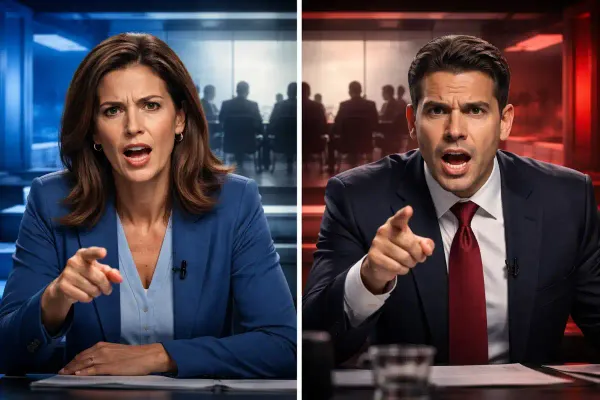
News anchors read the numbers with the same tone they use for stock prices and weather forecasts. Steady. Professional. Then cut to commercial. Then back to the next horror. Then commercial again.
Analysts debate "strategic objectives" while hospitals burn. They draw maps with arrows. They discuss "capabilities" and "degradation" and "operational tempo." They use words designed to hide the screaming.
Politicians call it "progress" while pilots go missing. They shake hands. They smile for cameras. They sleep in clean sheets far from the fire.
And us?
We're informed. We're updated. We're aware.
We're not horrified anymore. We're subscribed.
The Scroll
This is the new banality.
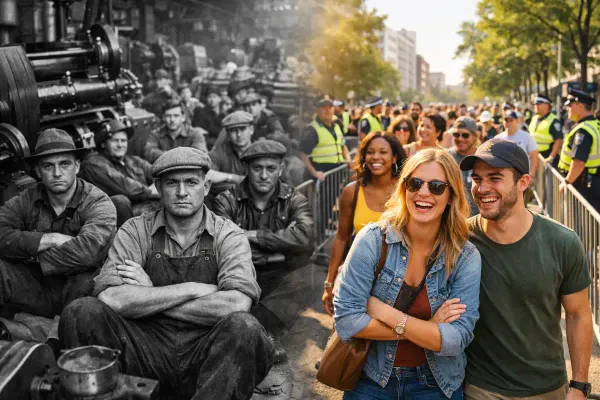
Not the bureaucrat stamping papers in a grey office. The citizen scrolling feeds on a glowing screen.
Not the clerk organizing trains to Auschwitz. The viewer consuming death between ads for sneakers and streaming services.
We've outsourced our horror. We've delegated our conscience to the algorithm. We've learned to watch atrocities and feel, what exactly?
Concerned? Maybe. For a moment.
Interested? Often. It's compelling content.
Entertained? Don't answer that. You already know.
A bridge full of families celebrating the first day of spring. Bombed. Filmed. Posted. Celebrated by the man who ordered it.
"Much more to follow!"
And there will be. There always is. More bridges. More hospitals. More schools. More children. More videos. More posts. More notifications. More updates.
And we will watch. We will read. We will stay informed.
We will not look away, that would be ignorance, and we pride ourselves on being informed.
We will not act, that would be impractical, and we pride ourselves on being realistic.
We will bear witness. Professionally. Passively. Endlessly.
But here's what we don't want to hear:
Witnesses who do nothing are not witnesses. They're spectators.
And spectators are complicit.
The Optimization of Atrocity
The horror isn't that they do this.
They've always done this. Empires bomb. Powers crush. The strong devour the weak. This is history. This is the pattern. This is what humans do when they have weapons and enemies and something to gain.
The horror is that we've made peace with it.
We've built a world where a man can post a video of dead civilians and face no consequences. Where "much more to follow" is just another notification, lost in the stream. Where genocide happens in real time and we debate it like a policy question between people with reasonable disagreements.
We haven't normalized evil.
We've optimized it.
Made it digestible. Shareable. Consumable. Fit it neatly between the morning coffee and the evening scroll.
Evil with analytics. Atrocity with engagement metrics. Massacre measured in impressions and click-through rates.
We know more about the killing than any generation in history. We see it clearer. We track it better. We have the data.
And we do less than any generation in history to stop it.
Because we've confused watching with witnessing. Information with action. Awareness with conscience.
What's Your Excuse?
Eichmann said he was just following orders.
What's your excuse? What's mine?
We're not following orders. No one made us watch. No one made us keep scrolling. No one forced us to treat massacre like content and move on with our fucking day.
We chose this.
Every time we see and do nothing. Every time we know and stay silent. Every time we treat horror as information instead of a call to act.
Every time we consume the suffering of strangers and then check what's for dinner.
The banality of evil isn't about them. The generals. The politicians. The pilots. The presidents posting videos of bridges collapsing.
It's about us.
The ones who watch. The ones who know. The ones who scroll past the dead on our way to something more interesting.
They Had Names
Eight people died under that bridge on Nature Day.
They had names. We'll never know them. They won't trend. They won't go viral. They won't become symbols. They'll just be numbers in a spreadsheet, casualties in a war, collateral in someone else's strategic objective.
They had families who loved them. Children they were holding. Food they had packed. Plans for the afternoon, the week, the rest of their lives.
They gathered under a bridge to celebrate spring. The first warm day. The end of winter. New beginnings.
Then fire from the sky.
And somewhere, right now, someone is scrolling past their deaths to check the score of a game.
That's the banality.
Not the bomb. The scroll.
Not the generals who ordered it. The citizens who consumed it and kept moving.
Not the machine of war. The audience that watches the show.
History Is Watching
History will not ask what the generals did. History already knows what generals do. They bomb. They kill. They follow orders and give them. They sleep fine at night. They always have.
History will ask what we did.
The ones who saw everything. The ones who knew everything. The ones who had more information, more footage, more data than any generation before us.
The ones with cameras in our pockets and atrocities in our feeds and the whole bloody mess streaming live to our screens every hour of every day.
History will ask what we did with all that information. All that awareness. All that unprecedented, unavoidable, algorithmically-delivered knowledge of exactly what was being done in our names, with our money, by our governments.
And we'll have to answer: We watched.
We watched and we stayed informed and we debated in comments and we felt concerned and we moved on.
History will not forgive us.
Because we cannot say we didn't know.
That excuse is gone forever.
We watched.
The scroll never stops. The feed keeps feeding. The notifications keep coming.
Tomorrow there will be more. More bombs. More bridges. More bodies. More posts celebrating destruction. More analysts explaining strategy. More numbers in more spreadsheets.
And we'll watch. We always do.
But somewhere, in the quiet moments between scrolls, ask yourself:
Is this who I wanted to be?
A spectator to atrocity? A consumer of death? An informed, aware, subscribed witness who bears witness to nothing because watching is not witnessing and knowing is not acting and being informed is not being human?
Is this what we've become?
Is this what we choose to remain?
The banality of evil isn't a diagnosis. It's a mirror.
Look into it.
Tell me what you see.