How Much of Your Fuel and Power Bill Is Tax?
Taxes are 52% of the EU petrol price, but only 29% of the electricity bill, down from 41%. Here's why, and why the tax is the only part you can see.
How much of your fuel and electricity bill is tax, and why that is the only part you can see
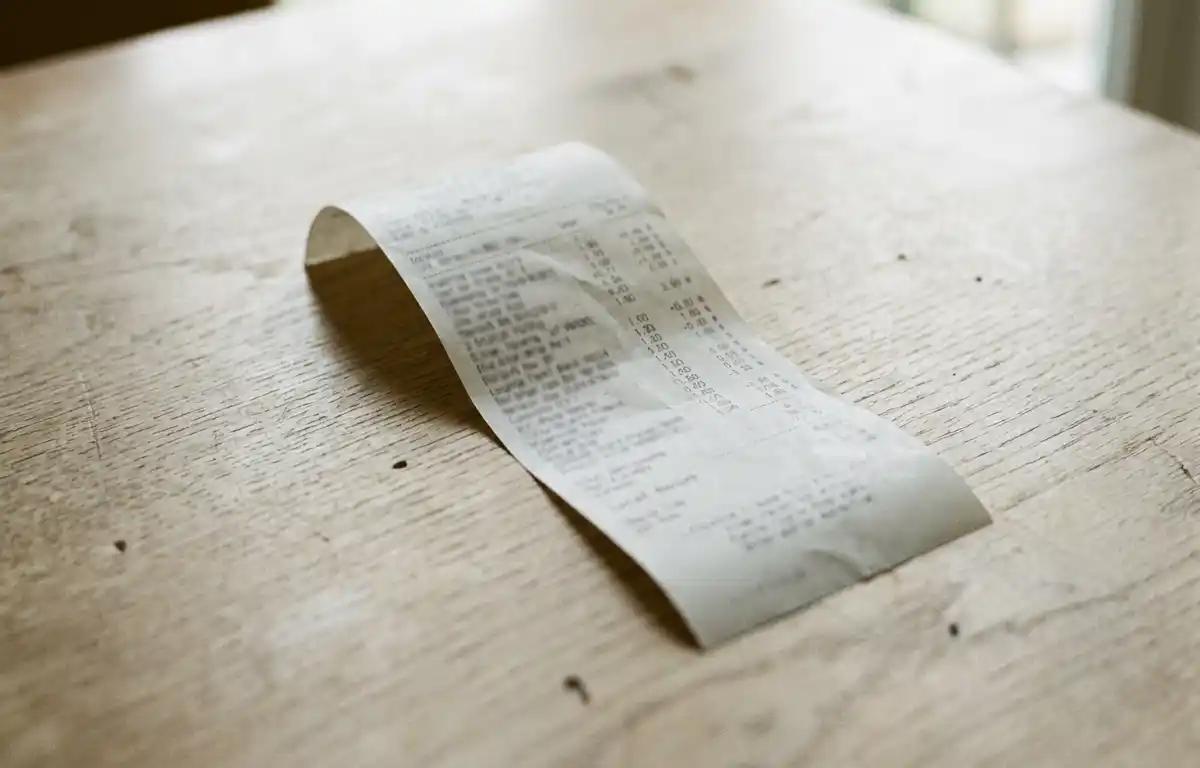
The receipt tells you one number and hides another.
Fill a car anywhere in the European Union and you will be handed a slip of paper that breaks the price into its parts, and one of those parts is the state's. In most countries it is printed there, or available on request, or published weekly by the European Commission in a bulletin anyone can download: this much was fuel, this much was duty, this much was VAT.
What the receipt does not tell you is what the refiner made. Or the trader. Or the retailer. That figure exists, it is the difference between the wholesale price and the pump price minus the tax, but nobody prints it on anything, and no bulletin publishes it weekly, and no political party has ever campaigned on it.
So when the price goes up, the public has one legible number to be angry about and one invisible one. This piece is about what happens to a society that can only see half its bill.
•••
Fuel: the claim is true
Start with the part everybody thinks they know, because for once the popular belief is correct.
As of March 2026, taxes, excise duty plus VAT, made up an average of 52.1 per cent of the price of a litre of Euro-super 95 petrol across the European Union. Twenty of the twenty-seven member states were above fifty per cent. Among the largest economies: Italy at 55 per cent, Germany at 54.5, France at 53, Spain at 45. The share ranged from around 44 per cent in Bulgaria up to the high fifties in Slovenia, sources published in the same week give Slovenia as 54.8 and as 57.8 per cent, so treat the exact top figure as uncertain and the shape as clear.
The EU's average excise duty alone runs to €0.570 per litre on petrol and €0.468 on diesel, before VAT is applied on top, and VAT is applied on top of the duty, so the state charges tax on its own tax.
Diesel is taxed more lightly almost everywhere. The EU average tax share is 44.6 per cent, and only four countries exceed half: Malta, Italy, Ireland and Slovenia. This is a policy inheritance rather than an accident, decades of European tax systems favouring commercial haulage, and it is being slowly unwound, though not quickly.
So: on a full tank, more than half of what you hand over goes to the state, and this is not a fringe claim or a distortion. It is what the European Commission's own weekly bulletin says.
•••
Electricity: the claim is false
Now the part almost everybody gets wrong, including, until recently, me.
In the second half of 2025, taxes and levies made up 28.9 per cent of the average household electricity price in the European Union. The average price was €0.2896 per kilowatt-hour. Of that, €0.2059 was the electricity and the network; €0.0837 was tax.
Not the biggest part. Not close. About twenty-nine per cent, and in two countries, Luxembourg and the Netherlands, the figure is negative, because subsidies and allowances exceed the taxes levied.
If you have heard otherwise, there is a reason, and it is not that somebody lied to you. It is that the claim used to be true.
In the second half of 2019, taxes and levies accounted for 41 per cent of the EU household electricity bill. In Denmark it was 64 per cent. In Germany, 54.
So the share has collapsed by a quarter in six years. And here is the part that matters: it did not collapse because governments cut energy taxes. It collapsed because the underlying price of electricity rose so violently past them that the tax, unchanged or even increased, became a smaller slice of a much bigger number.
The tax share went down. Your bill went up. Both of those are true at once, and if you only track the percentage you will reach exactly the wrong conclusion about what happened to you.
•••
What happened when prices finally fell
This is the finding I did not expect, and it is the reason this piece exists.
In 2025, wholesale electricity costs in Europe eased. Pre-tax household prices actually went down, modestly, but down, for the first sustained stretch since the crisis.
Final bills went up anyway.
Eurostat's own account of it is admirably direct: taxes and levies rose from €0.0804 per kilowatt-hour in the first half of 2025 to €0.0837 in the second, and as a share of the bill from 27.9 to 28.9 per cent, so that the slight decrease in pre-tax prices "was more than offset by higher taxation, leading to a modest increase in the final prices paid by consumers." An earlier release put it even more plainly: the decrease in pre-tax electricity prices has not yet been reflected in the final prices for consumers.
Read that in the order it happened. The thing that made your bill unbearable in 2022, the wholesale price, receded. The relief did not arrive. The space it left was occupied, partly by the withdrawal of the emergency subsidies governments had introduced during the crisis, and partly by levies rising back to their previous levels.
Nobody announced this. There was no vote on it, no press conference, no line in a manifesto that said when the price falls, we will keep the difference. It happened in the gap between two Eurostat releases, and it was reported in a statistical bulletin that perhaps four hundred people in Europe read.
•••
The case for all of it
Here is the argument for energy taxes, and I want to give it properly, because the people who make it are mostly right and the people who attack it are usually selling something.
Fuel duty is a pollution price, and it is the only one that works. Burning petrol imposes costs on people who are not in the car, in particulates, in carbon, in road wear, in congestion, in the health effects of urban air. Those costs are real and someone pays them; the question is only whether it is the driver at the pump or a child with asthma downstream. Every serious economist across the political spectrum agrees that taxing the harm at the point of consumption is the least bad instrument available.
Energy levies fund the thing everyone says they want. Grid connections for renewables, network reinforcement, storage, the physical rewiring of a continent that has decided to stop burning gas. This is genuinely expensive and it has to be paid for by somebody. Removing the levies does not remove the cost; it moves it to general taxation or to the future.
And when governments have cut fuel duty, drivers have frequently not received it. The evidence from Europe's 2022 fuel-duty reductions is uncomfortable for everyone: a substantial portion of the cut was absorbed into retailer margins rather than passed to the pump. Which is to say, the money that was supposedly being taken from you by the state was, when released, simply taken by somebody else, and you never saw the difference either way.
That last finding ought to be the centre of the debate. It almost never is.
•••
The two things wrong with it
First: it is the most regressive instrument available.
Energy is inelastic. You cannot decide to be a bit less cold, or to commute a bit less often, past a certain point, and the households at that point are precisely the ones with the oldest boilers, the worst insulation, the least efficient cars and the longest distances to work, because those things are what being poor consists of.
A household spending a tenth of its income on energy pays a vastly higher effective rate of energy tax than one spending a hundredth. This is not a side effect. It is arithmetic, and it is known to every finance ministry in Europe, and the instrument was chosen anyway, over producer levies, over progressive rebates, over windfall taxes on the companies that recorded historic profits during the same crisis that emptied household accounts.
Somebody made that choice. Repeatedly. In public. And almost nobody was watching the meeting.
Second: it is the only part of the price the public can see.
This is the argument I actually care about, and it has nothing to do with whether the tax is justified.
Your bill itemises the state's take. It does not itemise the supplier's. When the price of fuel rises, the government's share is a published, weekly, downloadable, arguable number, and the margin captured between wholesale and pump is a figure you would need a subscription to a commodity data service to estimate. One of these becomes a political controversy. The other does not, and cannot, because it is not written anywhere a voter will ever look.
So the anger has a single available destination. It goes to the itemised line, because the itemised line is the only line there is.
And notice who benefits from that arrangement. Not the government, which absorbs the fury. The beneficiary is the party whose share of your bill is not printed on it, and which, during the worst energy crisis in fifty years, watched a continent argue passionately about levies while booking the largest profits in its corporate history.
•••
What to take from this
Three things, and none of them is a slogan.
On fuel, the popular claim is true: more than half the pump price in most of Europe is tax, and you should know that, and it is defensible policy that you are entitled to argue about.
On electricity, the popular claim is false, and the truth is worse: the tax share fell because the underlying price rose past it, and when the underlying price finally came back down, the tax rose to meet it and you never felt the difference.
And on both: the number you are shown is the number you will be angry about. That is not a coincidence and it is not a conspiracy. It is simply what happens when one participant in a transaction is required to publish its share and the other is not.
Ask what the rest of the bill is. Nobody has to tell you, which is rather the point.
Frequently Asked Questions
How much of the petrol price is tax in Europe?
How much of the diesel price is tax?
How much of my electricity bill is tax?
Has the share of tax in electricity bills gone up or down?
Why did my electricity bill go up when wholesale prices fell?
Do fuel duty cuts actually reach drivers?
Why is the tax shown on my bill but not the supplier's profit?
•••
Sources
Fuel prices and tax shares. The figure of 52.1 per cent for petrol and 44.6 per cent for diesel as an EU average, the country-level breakdown, and the statement that twenty member states exceed 50 per cent on petrol are from Euronews Business calculations based on European Commission data as of 16 March 2026. Note that two Euronews articles published within days of each other give Slovenia's petrol tax share as 54.8 and 57.8 per cent respectively; the discrepancy is unexplained and both figures are reported here. Average EU excise duties of €0.570 per litre on petrol and €0.468 on diesel are from the Tax Foundation, Diesel and Gas Taxes in Europe, 2026 (February 2026). EU average pump prices of €1.871 per litre for Euro-super 95 and €2.076 for diesel are from the European Commission's Weekly Oil Bulletin No. 2230, published 2 April 2026, reflecting prices on 30 March.
Electricity prices and tax shares. The figures for the second half of 2025, an EU average household price of €0.2896 per kWh, of which €0.0837 was taxes and levies, giving a share of 28.9 per cent; VAT at 15.2 per cent of the total; Denmark highest at 49.1 per cent; Luxembourg at −6.3 per cent and the Netherlands at −5.2 per cent, are from Eurostat, Electricity price statistics (Statistics Explained), covering the standard household consumption band of 2,500 to 4,999 kWh per year. The rise in taxes and levies from €0.0804 to €0.0837 per kWh and from 27.9 to 28.9 per cent of the final bill, and the statement that the decrease in pre-tax prices was more than offset by higher taxation, are from the Eurostat news release of 5 May 2026. The earlier statement that the decrease in pre-tax prices "has not yet been reflected in the final prices for consumers," and the rise in the tax share from 24.7 per cent in the second half of 2024 to 27.6 in the first half of 2025, are from the Eurostat news release of 29 October 2025. The 2019 comparison, an EU average of 41 per cent, with Denmark at 64 per cent, Germany at 54 and Malta at 6, is from Eurostat's news release on household energy prices of 7 May 2020.
Pass-through of fuel duty cuts. The finding that a substantial share of European fuel-duty reductions during the 2022 energy crisis was absorbed into supplier and retailer margins rather than passed to consumers is drawn from the body of pass-through analysis conducted at the time by national competition authorities and independent researchers.
Readers should note that tax shares in fuel prices move continuously with the underlying commodity price: when crude rises, the tax share falls even if no tax rate changes. Figures cited here are snapshots from the dates given.
•••
The Kade Frequency is an independent investigative publication. No sponsors. No filters. No propaganda.
By the same author
Two books in restrained literary nonfiction
A. Kade's companion volumes, a meditation on thinking and character, and a meditation on love, real and imagined.
View the books →