Europe Forgot
Eighty years ago, Europe was rubble. Cities flattened. Millions dead. "Never again," they said. They built institutions. They wrote treaties. Now Europe watches another civilization burn and does nothing. Worse than nothing, Europe pays for it. Hosts the bases. Provides the logistics.
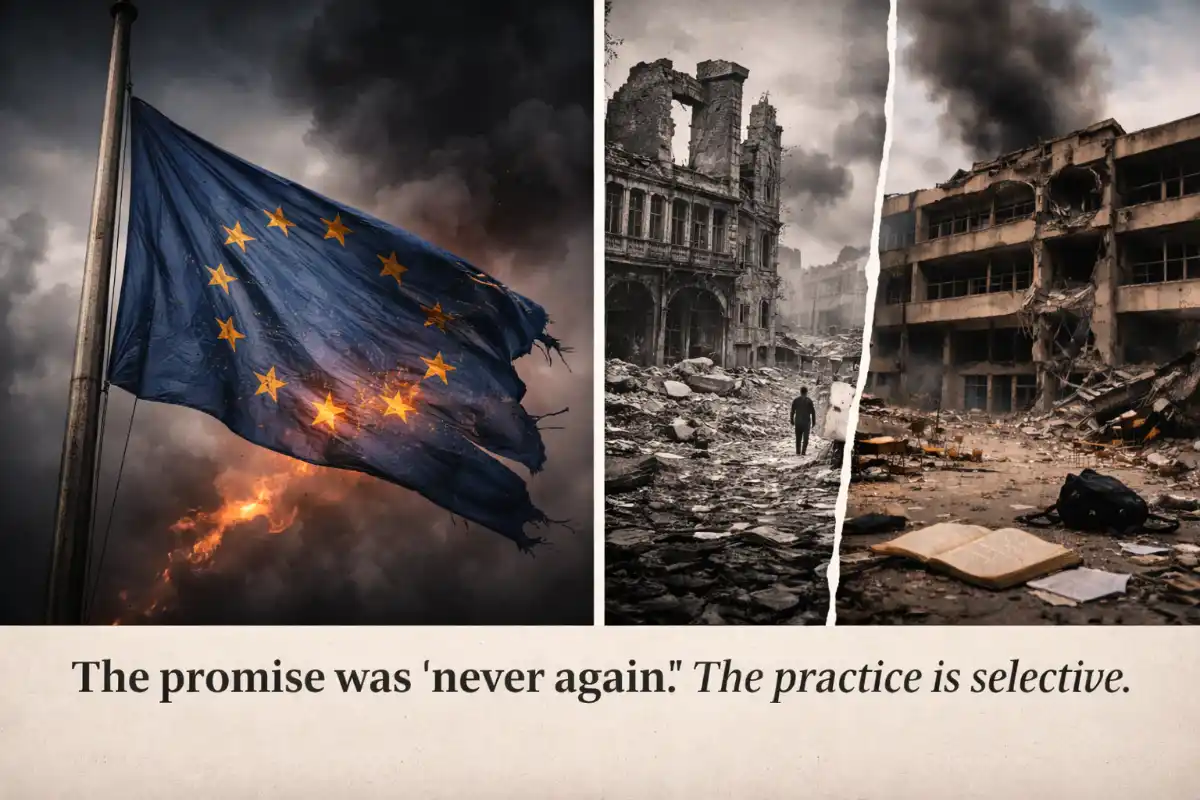
Eighty years ago, Europe was rubble. Cities flattened. Children in the streets. Millions dead. "Never again," they said. They built institutions. They wrote treaties. They swore oaths.
Now Europe watches another civilization burn and does nothing.
Not nothing. Worse than nothing. Europe pays for it. Hosts the bases. Provides the logistics. Then sends its leaders to beg the Gulf states for fuel to keep the lights on.
"Never again" had fine print. It meant never again to us.
Everyone else is fair game.
The Rubble Generation
My grandparents knew what bombs sound like. What hunger feels like. What it means to see a city disappear.
Yours probably did too, if you're European. The generation that crawled out of the wreckage and said: this cannot happen again. This will not happen again.
They built the European Union. Not for trade, that came later. For peace. To make war between France and Germany unthinkable. To bind nations so tightly together that pulling apart would hurt everyone.
They created the European Convention on Human Rights. The International Criminal Court. The Geneva Conventions strengthened and expanded. A web of laws and institutions designed to make atrocity, if not impossible, at least punishable.
They meant it. They had seen the alternative.
But they're gone now. And we, their grandchildren, have forgotten what they knew.
What Europe Is Doing
Let's be specific about the complicity.
Germany is restricting travel for men aged 17-45. If you want to stay abroad more than three months, you need permission. Why? Because they're preparing. Quietly. For what comes next.
Italy's Prime Minister Giorgia Meloni is touring the Gulf, Saudi Arabia, Qatar, UAE, hat in hand, begging for energy. Italian airports are rationing jet fuel. The war Europe didn't start is emptying Europe's tanks.
Robert Fico, Slovakia's Prime Minister, called the European Union a "suicide ship" on energy policy. He and Hungary's Viktor Orbán are demanding the EU lift sanctions on Russian energy. They see the iceberg. They're screaming. Brussels keeps rearranging the deck chairs.
The Strait of Hormuz has been closed for six weeks. Twenty percent of the world's oil flows through that chokepoint. Or did. Now Brent crude is above $110 a barrel and climbing. European economies are bleeding.
And what does Europe do?
It hosts the bases. Ramstein Air Base in Germany. RAF bases in the UK. Logistics hubs across the continent. American planes fly from European soil to drop bombs on Persian universities.
Europe doesn't fight the war. Europe enables it. Then pays the price. Then begs the bombers' allies for fuel.
This is not neutrality. This is complicity with extra steps.
The Audience
Europe has the best seats in the house.
Good view. Climate controlled. Comfortable distance. Close enough to see the flames, far enough to not feel the heat.
We watch Persia burn on our screens. We track the death toll like a stock ticker. We debate "proportionality" over dinner. We express "concern" in press releases drafted by committees.
And then we go to bed.
The United States does the bombing. Israel does the bombing. But Europe provides the audience. The legitimacy. The silence that reads as consent.
When Trump announces "Power Plant Day" like a fucking holiday sale, European leaders don't walk out of NATO. They don't close the bases. They don't refuse the flights. They issue statements of "concern" and then ask Qatar for more gas.
We are not neutral. We are spectators. And spectators who enable the show are not innocent.
What "Never Again" Meant
After the Holocaust, after the camps, after the photographs that made the world vomit, Europe said never again.
But what did it mean?
It meant: never again will we let this happen to European Jews. Never again will we let fascism rise here. Never again will we be the victims.
It didn't mean: never again will we watch genocide and do nothing. Never again will we enable atrocity for economic convenience. Never again will we choose comfort over conscience.
Rwanda happened. Europe watched. "Never again."
Bosnia happened. In Europe. For three years. While Europe "negotiated." Until Srebrenica. Eight thousand men and boys. Then, finally, action. Too late for the dead.
Syria happened. Europe watched. Then complained about the refugees.
Yemen happened. European weapons. European silence.
Gaza happened. Still happening. European "concern."
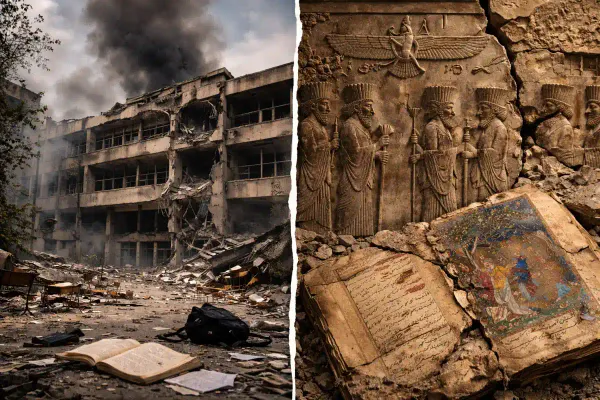
Now Iran. Universities bombed. Hospitals hit. Children dying. A civilization being erased in real time, on camera, with timestamps.
And Europe watches. Again. Still. Always.
"Never again" is the lie we tell ourselves so we can sleep.
The Vassals
Here's the truth Europe won't say out loud: we are not partners. We are vassals.
The United States decides. Europe complies. When America says jump, we ask how high and whether we can expense the fuel.
Trump threatens NATO withdrawal. European leaders panic. Not because they want American friendship, because they need American protection. Or think they do. Generations of outsourcing defense to Washington have left Europe unable to defend itself, unwilling to try, and terrified of being alone.
So, when America starts a war that Europe didn't want, Europe goes along. Provides the bases. Absorbs the economic shock. Begs the Gulf for energy. And issues statements of "concern" to maintain the illusion of independence.
We are not the leaders of the free world. We are the well-dressed servants, holding the coats while others do the killing.
Fico sees it. Orbán sees it. The "troublemakers" of Europe see what the respectable leaders won't admit: the European Union has become a mechanism for managing American dependency, not European sovereignty.
And so, a war in the Persian Gulf empties Italian airports of jet fuel. A closure in Hormuz spikes German heating bills. An American president's tantrum becomes a European economic crisis.
This is not alliance. This is clientelism. And we pay for it in ways we're only beginning to understand.
What Europe Could Do
Close the bases.
No American bombs fly from European soil. Not one. You want to bomb Persia? Do it from your own territory. Do it without our runways, our logistics, our complicity.
That's what sovereignty would look like. That's what "European values" would mean if they meant anything.
Refuse the war.
Say it plainly: this war is illegal. This war is wrong. We will not enable it, profit from it, or stay silent about it. We will not trade Iranian lives for American approval.
Lead on peace.
Forty countries met to discuss reopening the Strait of Hormuz. The US and Israel weren't there. Europe could be the bridge. Europe could be the honest broker. Europe should be, it’s what we claim to be good at.
Instead? Meloni begs the Saudis for gas. Scholz issues statements. Macron calculates. Brussels dithers.
We could act. We choose not to. And that choice has a name.
It's called complicity.
The Children Remember
The children of Iran will remember.
They'll remember which countries bombed their schools. Which countries provided the bases. Which countries watched and did nothing. Which countries issued "statements of concern" while their universities turned to rubble.
They'll remember Europe.
Not as the continent of human rights. Not as the beacon of international law. Not as the place that said "never again" and meant it.
They'll remember Europe as the audience. The enablers. The ones who could have helped and didn't. The ones who could have spoken and stayed silent. The ones who turned "never again" into "not our problem."
And they'll be right.
History will not ask what we said. It will ask what we did.
I'm writing this from Denmark. A small country that prides itself on human rights, international law, the legacy of resistance.
My country is in NATO. My country hosts American interests. My country benefits from the order that America enforces. My country is complicit too.
I don't write from a position of innocence. None of us do. That's the point.
The question is not whether our hands are clean. They're not. The question is what we do now. Whether we keep watching. Whether we keep enabling. Whether we let "never again" die as the most broken promise in European history.
Or whether we remember what our grandparents knew. What they crawled out of the rubble to tell us. What we've spent eighty years slowly, comfortably forgetting.
War is not abstract. Bombs are not strategic. Children are not collateral.
And silence is not neutrality.
Europe forgot. But it's not too late to remember.
The question is whether we want to.