The Burn Book: How Trump's DOJ Got Caught Spying on Congress to Protect Epstein's Friends
A photographer caught Att. Gen. Pam Bondi with a printout of Rep. Jayapal's Epstein file search history. Rep. Nancy Mace confirmed the DOJ is tracking every document Congress opens.

The Attorney General showed up to a Congressional hearing with a printout of a lawmaker's search history. A Republican confirmed the surveillance. And the FBI Director's sworn testimony just got exposed as a lie.
There's a photograph.
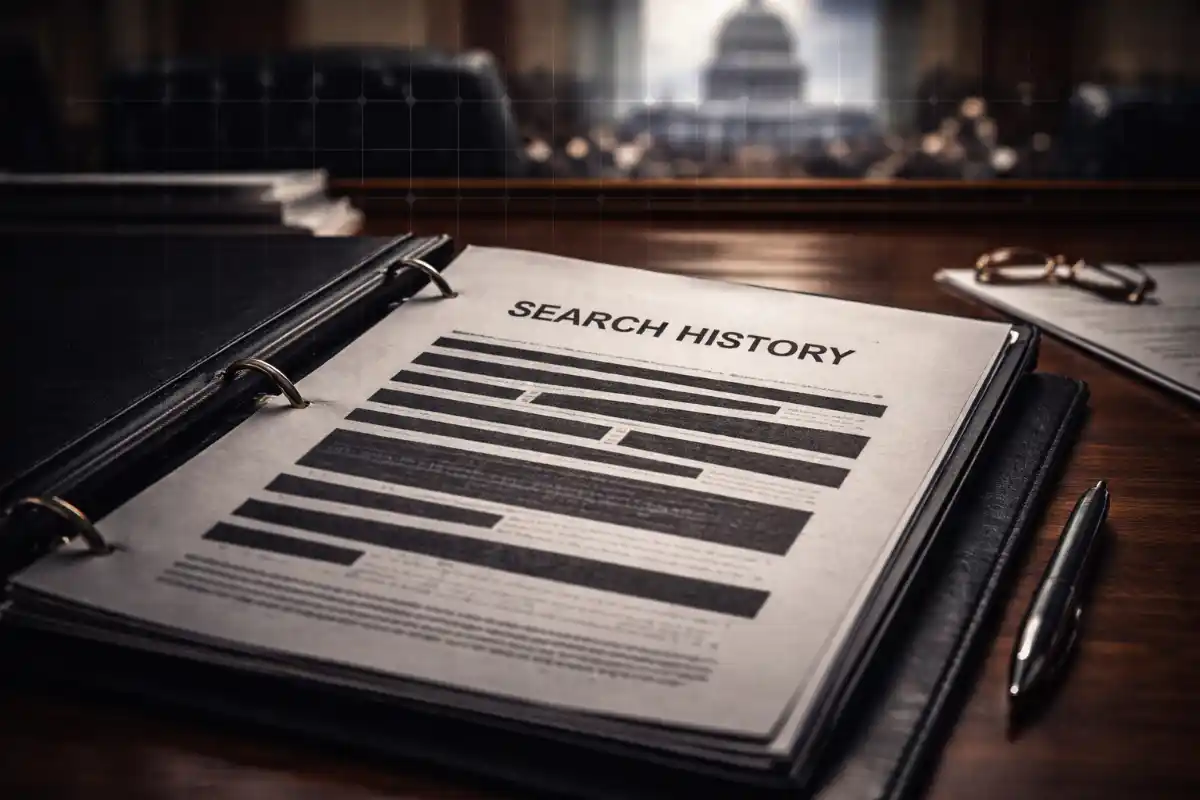
It was taken during yesterday's House Judiciary Committee hearing. Attorney General Pam Bondi is sitting at the witness table, flipping through a black binder. On one page, clearly visible to the camera, are the words:
"Jayapal Pramila Search History"
Below it: a list of document numbers from the Epstein files.
The Department of Justice , the agency tasked with upholding the law , had been tracking exactly which documents members of Congress searched when they came to review the unredacted Epstein files.
And then they gave that surveillance data to the Attorney General so she could prepare counterattacks for her oversight hearing.
Let that sink in.
The executive branch spied on the legislative branch's investigation into executive branch misconduct. They didn't hide it. They brought printouts.
The Setup
Here's how the trap worked:
Congress passed the Epstein Files Transparency Act, requiring the DOJ to release all unredacted records related to Jeffrey Epstein and his associates. The law specifically prohibited redacting names except for victims.
But when the DOJ released 3.5 million pages in late January, the documents were riddled with redactions, not of victims, but of powerful men.
The truth doesn’t trend. It survives because a few still care enough to keep it alive.
Keep The Kade Frequency transmitting.
So, the DOJ made a show of "transparency." They set up a viewing room at a satellite office. Four computers. Tiny room. Members of Congress could come view the "unredacted" versions of the files, but only in person, only on DOJ computers, only with DOJ staff watching over their shoulders.
Each member got a unique login and password.
What Congress didn't know: the DOJ was logging every single document they searched. Every file they opened. Every name they looked for. Timestamped.
Then they handed those logs to Pam Bondi before her hearing.
The Photograph
Getty photographer Roberto Schmidt captured the image. Bondi's binder, open on the table. "Jayapal Pramila Search History”, referring to Rep. Pramila Jayapal, a Democrat on the Judiciary Committee who had visited the DOJ viewing room the day before.
The document listed specific file numbers: EFTA (Epstein Files Transparency Act) followed by document codes. These matched exactly the files Jayapal had been reviewing.
"It is totally inappropriate and against the separation of powers for the DOJ to surveil us as we search the Epstein files," Jayapal said afterward. "Bondi showed up today with a burn book that held a printed search history of exactly what emails I searched. That is outrageous and I intend to pursue this and stop this spying on members."
But here's the part that should terrify everyone:
A Republican confirmed it.
Rep. Nancy Mace, not exactly a Democratic ally, posted on X: "Yes. I will confirm. DOJ is tracking the Epstein documents Members of Congress search for, open, and review. I was able to navigate the system today and I won't disclose how or the nature of how; but confirmed the DOJ is tagging ALL DOCUMENTS Members of Congress search, open and review. Based on how I confirmed this, there are timestamps associated with this tracking."
"It's creepy," Mace told reporters. "They're tracking every file that we open, and when we open it. They're tracking everything."
Rep. Jamie Raskin, ranking member of the Judiciary Committee, called it "outrageous, Orwellian" and said he has "reason to believe that it was happening to everyone" who visited the viewing room.
"It is a violation of the separation of powers for them to essentially be monitoring our computer searches on the Epstein files," Raskin said. He's now requesting a DOJ Inspector General investigation.
The Real Question
Why would the DOJ surveil Congressional searches of Epstein files?
The obvious answer: to know what questions were coming and prepare deflections.
The darker answer: to know which documents Congress was interested in, and which powerful people might need protecting.
Because here's what else happened this week: The cover-up got exposed in real time.
The Wexner Redaction
Rep. Thomas Massie, a Kentucky Republican who co-authored the Epstein Files Transparency Act, has been the sharpest thorn in the DOJ's side.
On Monday, Massie posted on X that he'd found a 2019 FBI document listing "co-conspirators" in Epstein's child sex trafficking operation. The document was almost entirely redacted, except for Jeffrey Epstein and Ghislaine Maxwell.
One name that was blacked out: Les Wexner, the billionaire founder of Victoria's Secret and Epstein's only publicly acknowledged client for decades.
Independent investigations. Imperial expansion exposed. Pattern documented.
Get investigations delivered.
Massie pointed out the obvious: Wexner's name appears over 4,000 times in the Epstein files. It wasn't redacted anywhere else. But in the one document where Wexner is explicitly labeled a "co-conspirator in child sex trafficking”, suddenly, redaction.
Within 40 minutes of Massie's tweet, the DOJ unredacted Wexner's name.
Forty minutes.
Deputy Attorney General Todd Blanche claimed on X that Wexner's name "already appears in the files thousands of times. DOJ is hiding nothing."
Massie's response at yesterday's hearing: "Yeah, I already told you that. This is where he's listed as a co-conspirator, not to tax evasion, but to child sex trafficking. And you didn't unredact it until I caught you red-handed."
Bondi's defense? She called Massie "a failed politician" with "Trump derangement syndrome."
The Republican who co-wrote the bill forcing release of these files. Trump derangement syndrome.
The Patel Problem
Here's where it gets legally explosive.
FBI Director Kash Patel testified under oath to Congress in September 2025. Senator John Kennedy asked him directly whether there was evidence that Epstein trafficked victims to other individuals.
Patel's answer: "There is no credible information, none. If there were, I would bring the case yesterday that he trafficked to other individuals."
At a House hearing the same week, Patel was asked if anything in the files pointed to other people having engaged in underage sex.
"That's correct," Patel said. "To my knowledge, no."
Now we have the FBI's own 2019 document , prepared when Trump was president , listing Wexner and others as "co-conspirators" in "child sex trafficking."
Massie put it plainly: "Kash Patel testified to Congress that FBI had no evidence of other sex traffickers. This is FBI's own 2019 document listing Wexner as coconspirator in child sex trafficking."
Either Patel lied under oath, or he's so incompetent he didn't know what was in his own agency's files.
Either way: perjury or gross negligence. Pick one.
The Six Names
On Tuesday, Rep. Ro Khanna , a California Democrat who partnered with Massie on the transparency law , went to the House floor and read six names aloud. These were men whose identities the DOJ had redacted in the Epstein files "for no apparent reason."
The names:
- Les Wexner, Victoria's Secret founder, FBI-labeled co-conspirator
- Sultan Ahmed Bin Sulayem, Emirati businessman, appears over 4,700 times in the files
- Salvatore Nuara
- Zurab Mikeladze
- Leonic Leonov
- Nicola Caputo
"If we found six men that they were hiding in two hours," Khanna said, "imagine how many men they are covering up for in those 3 million files."
The DOJ's defense: Four of those names "only appear in one document."
Think about that logic. If a powerful man only appears once, in a document that might incriminate him, that's a reason to redact him? That's the opposite of what the law requires.
The Victims Get Exposed, The Predators Get Protected
Here's the part that should make your blood boil.
While the DOJ was carefully redacting the names of wealthy men labeled as co-conspirators, they were failing to redact the names of victims.
Rep. Jamie Raskin told the hearing there were 3,000 pages where survivors' names were left unredacted, exposed to the public.
Survivors who attended yesterday's hearing, wearing white, seated directly behind Bondi, raised their hands when asked if they'd tried to contact the DOJ and received no response.
All of them raised their hands.
Rep. Dan Goldman pointed to an email in the released files that contained a list of victims. Only one name had been blacked out.
"That is clearly intentional to intimidate these survivors and victims," Goldman said.
Massie showed an even more damning document: an email from victims' lawyers to the DOJ containing a list of names NOT to release.
"What did the DOJ do with this email?" Massie asked. "They released it! Literally the worst thing you could do to the survivors, you did."
Bondi's response when asked to apologize to the survivors sitting behind her: "I'm not going to get in the gutter for her theatrics."
The Pattern
Let's connect the dots:
- The DOJ redacted co-conspirators' names, specifically in documents where they're labeled as participants in child sex trafficking.
- The DOJ exposed survivors' names, in thousands of pages, despite the law requiring their protection.
- The FBI Director testified under oath that there was "no credible evidence" of trafficking to others, while the FBI's own documents list multiple co-conspirators.
- The DOJ surveilled Congress, tracking exactly which documents lawmakers searched, then providing that intelligence to the Attorney General before her oversight hearing.
- When caught, they attack, calling a Republican co-author of the transparency law a "failed politician" with "Trump derangement syndrome."
This isn't incompetence. Incompetence doesn't produce this pattern.
This is a cover-up being executed in plain sight by people so confident in their impunity they brought printouts of their surveillance to a Congressional hearing. It's the same structural capture we exposed in The Shadow Empire , entities so embedded in power they no longer fear accountability.
The Wexner Question
Les Wexner deserves special attention.
For decades, Epstein's only publicly acknowledged financial client was Wexner. Epstein lived in a New York mansion previously owned by Wexner. Epstein managed Wexner's money. They were so close that Wexner gave Epstein power of attorney over his affairs.
FBI documents from 2019, when Trump was president, label Wexner a "co-conspirator" in child sex trafficking. Multiple internal FBI emails discuss him as one of "10 co-conspirators" being investigated.
An August 2019 FBI email concluded there was "limited evidence" of Wexner's involvement. But that same day, another internal memo still labeled him a co-conspirator.
Wexner's lawyers say the Assistant U.S. Attorney told them in 2019 that Wexner "was neither a co-conspirator nor target in any respect" and that he "cooperated fully."
But if that's true, if Wexner was cleared, why was his name the only one redacted in the co-conspirator document? Why did it take Massie's public tweet to get it unredacted?
Wexner is scheduled to be deposed by the House Oversight Committee on February 18.
Let's see if the DOJ surveils who searches for his name before then.
What Happens Now
Raskin is requesting a DOJ Inspector General investigation into the surveillance of Congress.
But let's be honest about what that means: Raskin is asking the DOJ to investigate the DOJ for spying on Congress to protect the DOJ's handling of the Epstein cover-up.
The Inspector General reports to the Attorney General.
The Attorney General is Pam Bondi.
Pam Bondi is the one who showed up with the burn book.
This is asking the fox to investigate who's been eating the chickens. It's why investigative journalism matters , when oversight institutions are themselves compromised, as we've documented across Who Is Running Europe.
The real question is whether House Republicans, who control the chamber, will do anything.
Massie has been relentless. Mace confirmed the surveillance. But Jim Jordan, the Judiciary Committee chairman, spent the hearing praising Bondi's work on "violent crime and illegal immigration."
The committee's Republican majority could subpoena the surveillance logs. They could demand to know who ordered the tracking. They could hold Patel in contempt for potential perjury.
They could do their jobs.
We'll see if they do.
The Burn Book
In the movie Mean Girls, the "burn book" is a notebook full of cruel secrets about classmates, ammunition for social destruction.
Bondi's burn book is worse. It's a dossier compiled through surveillance of a co-equal branch of government, used to deflect oversight into potential cover-ups of child sex trafficking by wealthy and powerful men.
The DOJ didn't just fail to comply with the Epstein Files Transparency Act. They didn't just protect co-conspirators while exposing victims. They didn't just potentially commit perjury through the FBI Director.
They surveilled Congress. They got caught. And they don't seem to care.
Because who's going to stop them?
The survivors sitting in white behind Pam Bondi raised their hands when asked if the DOJ had ignored them.
The powerful men whose names were redacted don't have to raise their hands for anything.
That's the system working exactly as designed.
The Kade Frequency exposes institutional capture and systemic corruption. Subscribe for investigations that follow the money, name the names, and explain why the powerful stay protected while the victims get exposed.
Exposed Names in Epstein Files
Per Rep. Ro Khanna's floor statement, February 11, 2026:
Name | Known Details |
Les Wexner | Victoria's Secret founder, FBI-labeled co-conspirator, appears 4,000+ times in files |
Sultan Ahmed Bin Sulayem | Emirati businessman, appears 4,700+ times in files |
Salvatore Nuara | Limited public information |
Zurab Mikeladze | Limited public information |
Leonic Leonov | Limited public information |
Nicola Caputo | Limited public information |
All names were redacted by the DOJ despite no legal basis under the Epstein Files Transparency Act, which only permits redaction of victims' identities.
FAQ Section
Q: Did the DOJ surveil Congress's Epstein file searches? A: Yes. A photograph from the February 11, 2026 House Judiciary hearing shows Attorney General Pam Bondi with a document titled "Jayapal Pramila Search History" listing Epstein files the congresswoman had searched. Republican Rep. Nancy Mace confirmed the DOJ tracks every file members of Congress open, including timestamps.
Q: Who is Les Wexner and why was his name redacted? A: Les Wexner is the billionaire founder of Victoria's Secret and was Jeffrey Epstein's only publicly acknowledged financial client for decades. FBI documents from 2019 label him a "co-conspirator" in child sex trafficking. His name was redacted in that specific document until Rep. Thomas Massie publicly called it out, after which it was unredacted within 40 minutes.
Q: Did Kash Patel lie under oath about Epstein? A: FBI Director Kash Patel testified in September 2025 that there was "no credible information" that Epstein trafficked victims to anyone other than himself. However, FBI documents from 2019 list multiple individuals as "co-conspirators" in child sex trafficking, including Les Wexner. This apparent contradiction has led Rep. Thomas Massie to accuse Patel of lying to Congress.
Q: What names were revealed from the Epstein files? A: Rep. Ro Khanna read six previously redacted names on the House floor: Les Wexner (Victoria's Secret founder), Sultan Ahmed Bin Sulayem (Emirati businessman), Salvatore Nuara, Zurab Mikeladze, Leonic Leonov, and Nicola Caputo. The DOJ had redacted these names despite no legal basis under the Epstein Files Transparency Act.
Q: Were Epstein victims' names protected in the file release? A: No. While the DOJ redacted names of wealthy men labeled as co-conspirators, they failed to redact survivors' names in approximately 3,000 pages. Survivors attending the February 11 hearing indicated they had tried to contact the DOJ and received no response.
Q: What is the "burn book" referenced in the Bondi hearing? A: During the hearing, Bondi frequently referenced a black binder containing opposition research on Democratic lawmakers. Photographs revealed it contained surveillance data including Jayapal's Epstein file search history. Rep. Jared Moskowitz mockingly called it a "burn book," referencing the movie Mean Girls.
No ads. No sponsors. Just signals from the noise.
Keep The Kade Frequency transmitting.
© 2026 The Kade Frequency. All rights reserved.