Chinagate: How China Bought the European Parliament (And Brussels Won't Prosecute)
Up to 15 MEPs allegedly took Huawei bribes—smartphones, tickets, €4K packages, wire transfers, for favorable votes on €15B in 5G contracts. 320 Huawei visits in 12 months. Zero arrests. This is Qatargate 2.0, and Brussels is burying it the same way: quietly, deliberately, permanently.
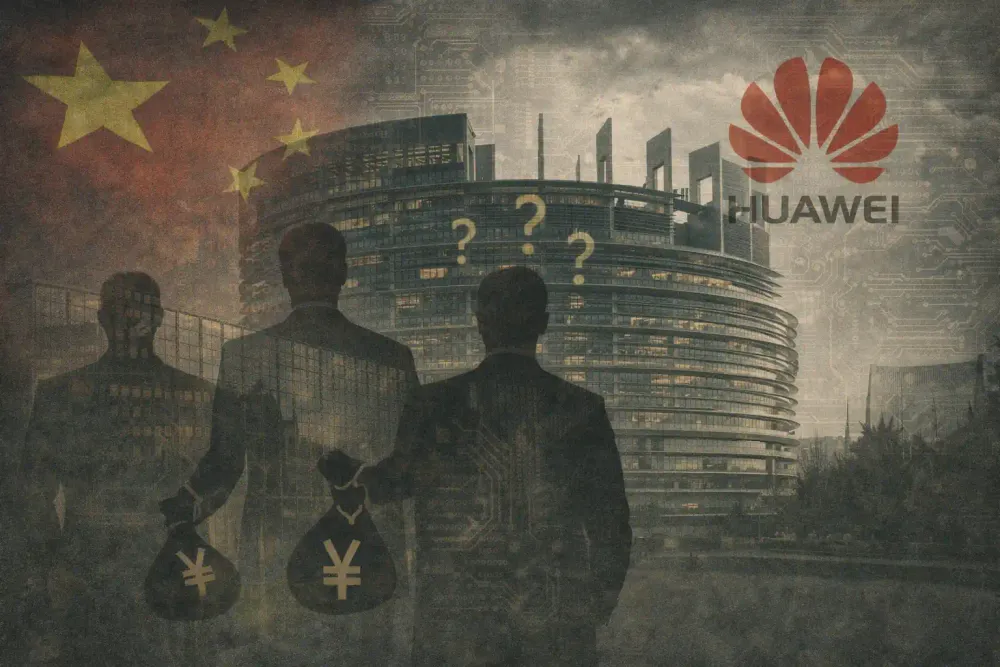
Up to 15 Members of the European Parliament took bribes from Huawei. Smartphones, football tickets, wire transfers, €4,000 gift packages. 320 visits to MEP offices in 12 months. A €15 billion 5G contract hanging in the balance.
And Brussels' response? Suspend Huawei's building access. That's it.
No indictments. No prosecutions. No consequences. Just a quiet suspension of badges while the corruption investigation conveniently stalls and the media moves on to the next scandal.
This is Qatargate 2.0. Except this time, it's not Qatar buying influence, it's China. And unlike Qatargate, where at least some MEPs got arrested, Chinagate is being systematically buried by the same institutions that claim to fight corruption.
Why? Because the EU needs Chinese technology more than it needs integrity. Because prosecuting this scandal would expose how deeply Chinese interests have penetrated European decision-making. Because admitting the European Parliament is for sale, again, would be too embarrassing after Brussels spent two years claiming Qatargate was an isolated incident.
It wasn't isolated. It's the business model.
Let me show you exactly how China bought the European Parliament, why no one's going to prison, and what this reveals about the systematic corruption at the heart of EU institutions.
The Bribes: Champions League Tickets and €4,000 Packages
Let's start with what we know from prosecutors' filings and investigative reporting.
Between 2022 and early 2025, Huawei representatives made 320+ visits to MEP offices, nearly double the next highest tech company. That's not lobbying. That's occupation.
According to court documents and media investigations, the bribes included:
Brand-new Huawei smartphones given to MEPs "to test" (translation: free €1,200 phones)
The truth doesn’t trend. It survives because a few still care enough to keep it alive.
Keep The Kade Frequency transmitting.
Champions League tickets in premium boxes, matches involving major European clubs
Wire transfers through shell companies and "consultancy fees" for minimal work
Gift packages valued at €4,000 each, well above the European Parliament's strict zero-gift rule
"Study trips" to China with all expenses paid, including luxury accommodations
Speaking fees for pro-Huawei statements at conferences Huawei organized
The pattern is identical to Qatargate: foreign government identifies MEPs with influence over relevant policy, offers gifts and money, MEPs take pro-foreign government positions.
In this case, the policy was 5G infrastructure contracts, tech regulation, and China's market access to Europe.
The Money Trail
Prosecutors have traced payments through a Portuguese consultancy, then laundered via shell companies in Luxembourg and Cyprus before reaching personal accounts.
Sound familiar? That's the exact same structure used in Qatargate, routed through NGOs and consultancies to hide the origin.
According to Transparency International EU, the MEPs allegedly took "political positions" favorable to Huawei in exchange for these gifts and payments. Translation: They voted the way China wanted them to vote.
What positions? Let's see.
What China Was Buying: €15 Billion in 5G Contracts
Huawei wasn't bribing MEPs for fun. They were buying policy outcomes worth billions.
The 5G Battle
Between 2019-2023, the EU was deciding whether to allow Huawei to build Europe's 5G infrastructure. The United States was pressuring Brussels to ban Huawei, citing national security concerns, the Chinese government could use Huawei equipment to spy on European communications.
Huawei's European pipeline: €15 billion in 5G equipment contracts across multiple member states.
If the EU banned Huawei, that €15 billion evaporates. Chinese influence over European digital infrastructure disappears. Europe becomes more dependent on American and European tech companies.
So Huawei did what any rational actor does when billions are at stake: They bought the people making the decision.
According to the allegations, MEPs who received Huawei gifts and money:
Opposed stronger restrictions on Chinese tech companies in Parliament votes
Argued against security concerns about Huawei in committee hearings
Lobbied their national governments to allow Huawei contracts
Pushed for "risk-based" rather than blanket restrictions, which sounds reasonable until you realize Huawei wrote the "risk assessment" criteria
Spoke at Huawei-sponsored events praising the company's commitment to European values (while cashing Huawei checks)
This isn't speculation. Court filings explicitly state MEPs took gifts "in exchange for taking political positions" favorable to Huawei.
The Tech Regulation Angle
But 5G wasn't the only target. Huawei also wanted influence over:
The EU's Digital Markets Act - which regulates big tech platforms
The Chips Act - €43 billion in European semiconductor subsidies
AI regulation - the world's first comprehensive AI law
Data governance rules, who can access and process European data
Cybersecurity certification, standards that could exclude Chinese equipment
Every one of these policies affects whether Chinese tech companies can operate in Europe. And according to prosecutors, Huawei was paying MEPs to shape these policies in China's favor.
The Scale: Up to 15 MEPs Compromised
Here's what makes Chinagate potentially bigger than Qatargate: The number of MEPs allegedly involved.
Qatargate implicated around 5-6 MEPs directly. Chinagate? Up to 15 current and former MEPs are allegedly involved, according to media reports citing prosecutorial sources.
That's 2% of the entire European Parliament potentially compromised by a single foreign government.
And we only know about Huawei. What about other Chinese companies? What about TikTok's parent company ByteDance? What about Chinese state-owned enterprises? What about the Belt and Road Initiative contracts?
According to Viola von Cramon-Taubadel, a Green Party MEP, this goes far beyond Huawei: "Kazakhstan, Azerbaijan, and Russia also systematically purchased influence over an extended period."
And now China.
The European Parliament isn't just corrupt. It's a marketplace. Governments and corporations shop for votes the way you shop for groceries. Need 5 MEPs to block a resolution? Here's the price list.
The Cover-Up: Why No One's Going to Prison
Here's where it gets really fucked up.
Qatargate broke in December 2022. Arrests, raids, €900,000 in cash found in suitcases and apartments. Eva Kaili, a Parliament vice president, arrested on live television. The scandal was impossible to ignore.
Chinagate became public in March 2025. And then... silence.
No arrests. No dramatic raids. No cash in suitcases. Just an announcement that prosecutors are "investigating" and Parliament suspended Huawei's access badges.
Why the difference?
Reason 1: The EU Needs Chinese Tech
Despite all the rhetoric about "strategic autonomy," Europe is deeply dependent on Chinese technology.
Critical minerals for batteries and solar panels? China controls 60-90% of global supply.
5G equipment? Huawei and ZTE are cheaper and more advanced than European alternatives.
Semiconductors? China is Europe's second-largest supplier after Taiwan.
Consumer electronics? Chinese companies dominate smartphones, laptops, electric vehicles.
Manufacturing capacity? European companies produce in China.
If Brussels prosecutes Chinagate aggressively, China retaliates. Suddenly, those critical mineral exports get delayed. Those 5G contracts go elsewhere. Those manufacturing partnerships dry up.
The EU talks tough about China. But when it comes to actual enforcement? Economic dependency wins.
Reason 2: Too Many MEPs Involved
Prosecuting 15 MEPs would be a political catastrophe for the European Parliament.
After Qatargate, Parliament claimed it was an isolated incident, a few bad actors. They passed "reforms" (weak, cosmetic changes that fixed nothing). They promised it would never happen again.
And then it happened again. Immediately. With more MEPs involved.
Admitting that 2% of Parliament is compromised, and that the "reforms" failed, would destroy what little credibility the institution has left.
So instead, the investigation quietly stalls. No indictments issued. Media coverage fades. And in a few months, everyone pretends it never happened.
Reason 3: China Plays Hardball
Qatar can be embarrassed in international media. Morocco can be sanctioned. These are small to mid-sized countries that need Europe more than Europe needs them.
China is different.
China is the world's second-largest economy. A permanent UN Security Council member. Europe's second-largest trading partner. A country with the economic and political power to make Brussels hurt if it pushes too hard.
When the EU tried to pass modest sanctions on China over Xinjiang (Uyghur forced labor), China immediately sanctioned European politicians, think tanks, and institutions in retaliation.
That was over symbolic sanctions. Imagine what China would do if the EU actually prosecuted a corruption case that exposed systemic Chinese influence-buying in European institutions.
Brussels doesn't want to find out.
Reason 4: The Parliament Protects Its Own
Here's a pattern from both Qatargate and Chinagate:
MEPs vote to lift immunity only when forced by overwhelming public pressure.
In Qatargate, Parliament initially resisted lifting immunity for accused MEPs. Only after massive media coverage and public outrage did they finally vote to allow prosecutions.
In Chinagate? No public outrage. The story broke, ran for a few days, and disappeared. No sustained media campaign. No protests. No political pressure.
So Parliament does nothing. And the investigation stalls.
Why would MEPs vote to prosecute their colleagues when it might expose how many of them have similar arrangements with other governments or companies?
One in four MEPs has been involved in scandals or broken the law, according to investigative journalism examining the entire Parliament. If you start pulling the Chinagate thread, you might unravel the whole system.
So they don't pull. They just quietly suspend some building badges and wait for everyone to forget.
The Qatargate Comparison: Same Crime, Different Response
Let's compare how Brussels handled these two identical corruption scandals:
Qatargate (December 2022):
- Arrests: Immediate, dramatic raids
- Cash seized: €900,000 in suitcases, apartments
- MEPs charged: 6+ arrested or charged
- Media coverage: Massive, sustained, international
- Parliament response: Emergency sessions, immunity lifted, "reforms" passed
- Public pressure: Enormous, protests, calls for resignations
Chinagate (March 2025):
- Arrests: None
- Cash seized: None publicly disclosed
- MEPs charged: Zero (as of December 2025)
- Media coverage: Brief, limited, quickly forgotten
- Parliament response: Suspended Huawei badges, vague "investigation" promises
- Public pressure: Minimal, no sustained campaign
Why the difference?
Qatargate was impossible to hide. Belgian police did dramatic raids. They found literal suitcases of cash. The visuals were too good, police hauling bags of money, a Parliament vice president arrested, her father caught with €600,000 at a hotel.
Chinagate was handled quietly. Prosecutors filed documents. Media reported allegations. But no dramatic raids. No suitcases. No live arrests. So the story dies.
And that's by design.
After Qatargate, EU institutions learned: Don't do dramatic public raids that create media spectacles. Handle corruption investigations quietly. Let them drag out. Wait for attention to fade. Then quietly drop charges or issue minimal penalties years later when no one's paying attention.
The "Reforms" That Changed Nothing
After Qatargate, the European Parliament passed what it called "comprehensive ethics reforms" to prevent future corruption.
Here's what those reforms actually did:
Gift Ban? Not Really.
Parliament tightened gift rules but kept massive loopholes:
Gifts "in official capacity" are still allowed if they're "customary" and "modest value"
Hospitality at events is still permitted
Study trips sponsored by foreign governments and companies are still legal as long as they're "transparent"
Definition of "modest" left deliberately vague
Translation: MEPs can still take gifts, they just have to report them. And the reporting is checked by... the Parliament itself. No external oversight.
Side Jobs? Still Allowed.
MEPs can still:
Work as consultants for companies affected by legislation they vote on
Sit on corporate boards while serving in Parliament
Receive speaking fees from interest groups
The only requirement: Disclose it publicly. But disclosure without enforcement is just public corruption instead of hidden corruption.
Revolving Door? Wide Open.
MEPs can leave Parliament and immediately start working as lobbyists for the same companies they regulated.
There's a "cooling off period" but it's full of exceptions and barely enforced.
Enforcement? Nonexistent.
Who investigates ethics violations? Parliament's own ethics committee.
Who decides sanctions? MEPs voting on their colleagues.
Who has external oversight? No one.
This isn't reform. It's theater. The Parliament investigated itself, found minor problems, implemented cosmetic changes, and declared victory.
And then Chinagate happened, proving the "reforms" were bullshit.
The Systematic Problem: Parliament Is Designed for Corruption
Here's what both Qatargate and Chinagate prove: The European Parliament's corruption isn't a bug. It's a feature.
The system is designed to make corruption easy and consequences minimal:
1. No Meaningful Gift Limits
Unlike many national parliaments, the EU Parliament has no strict monetary limit on gifts. It's all "case by case" and "modest value", which means anything goes as long as you report it.
2. Side Jobs Encouraged
MEPs are allowed to work for private companies while legislating. This would be illegal in many democracies. In Brussels, it's normal.
3. Weak Financial Disclosure
MEPs must disclose income but:
- No verification of accuracy
- No requirement to disclose spouse/family finances
- No detailed breakdown of consultancy work
- Shell company structures make tracing money almost impossible
4. Self-Policing
Parliament investigates its own ethics violations. No independent body. No external prosecutor for corruption cases unless national governments get involved.
It's like asking a bank to investigate its own embezzlement.
5. Immunity Protection
MEPs have broad parliamentary immunity that protects them from prosecution. National governments must request immunity be lifted, and Parliament votes on it.
Translation: Your colleagues decide if you can be prosecuted. Good luck getting 50%+1 to vote against their own interests.
6. Lobbying Is Legal
Brussels has 25,000 registered lobbyists, more than MEPs, staff, and commissioners combined. They spend €343 million annually lobbying EU institutions.
That's not corruption. That's the system working as designed.
The line between lobbying and bribery is: Lobbying is legal bribery.
You're allowed to give MEPs gifts, hospitality, trips, and speaking fees. You're allowed to hire them as consultants. You're allowed to fund their campaigns indirectly through political groups.
The only thing you're not allowed to do is hand them cash directly for specific votes. Everything else is fair game.
So when does lobbying become bribery?
When you get caught. When it's too obvious. When the media makes it a scandal.
Otherwise? It's just Tuesday in Brussels.
The China Strategy: Beyond Huawei
Chinagate isn't just about Huawei. It's about a systematic Chinese strategy to influence European policy through:
1. Economic Leverage
China is now the EU's second-largest trading partner (after the US). That gives Beijing enormous leverage over Brussels.
Threaten European companies' access to Chinese markets? MEPs suddenly become very sympathetic to Chinese concerns.
2. Infrastructure Investment
Through the Belt and Road Initiative, China has invested billions in European infrastructure:
Ports: Piraeus (Greece), Rotterdam (Netherlands), Hamburg (Germany)
Energy: Nuclear plants, solar farms, wind projects
5G networks: Despite security concerns, Chinese equipment is everywhere
High-speed rail: Chinese companies bidding on European contracts
Every investment creates a constituency of European businesses and politicians who profit from Chinese money, and who will lobby to protect Chinese interests.
3. Academic Capture
Confucius Institutes at European universities, ostensibly for cultural exchange, actually for influence operations
Research partnerships that give China access to European technology
Funding for think tanks that produce pro-China research
Student exchanges that create future European leaders with ties to China
4. Media Influence
China Daily inserts in European newspapers
Funding for European media outlets that take Chinese advertising
Partnerships with European broadcasters
Social media influence operations promoting Chinese narratives
5. Elite Capture
Former European leaders working for Chinese companies after leaving office
Think tank funding that shapes policy research
Academic positions for retired politicians at Chinese-funded institutions
Business partnerships that create financial dependencies
This is a whole-of-government strategy. China isn't just bribing a few MEPs. It's building systematic influence across European institutions, business, media, and academia.
Huawei bribing MEPs is just one visible piece of a much larger operation.
The €15 Billion Question: Did It Work?
So after all this, the bribes, the lobbying, the influence operations, did China get what it wanted?
Let's check the scoreboard:
5G Infrastructure
Despite US pressure, multiple EU member states allowed Huawei equipment in their 5G networks:
Germany: Partial ban, but Huawei equipment still in some networks
France: "Risk-based approach", Huawei allowed in non-core network
Poland: Banned from 5G core, allowed in periphery
Spain, Italy, Portugal: Huawei contracts approved with "safeguards"
Translation: Huawei lost some battles but kept billions in contracts.
Digital Markets Act
The EU's DMA regulates Big Tech platforms. China wanted exemptions for Chinese companies.
Result: TikTok (ByteDance) initially classified as "gatekeeper" requiring regulation, but enforcement has been weak and selective.
Chips Act
€43 billion in European semiconductor subsidies. China wanted to ensure Chinese companies could participate.
Result: Language about "trusted suppliers" and security requirements, but no blanket ban on Chinese companies.
AI Regulation
The EU AI Act is the world's first comprehensive AI law. China wanted to influence definitions and enforcement.
Result: Act passed, but compliance timeframes are long and enforcement mechanisms are being negotiated, plenty of time for Chinese lobbying.
Tech Partnerships
Despite all the security concerns and corruption scandals, European-Chinese tech partnerships continue:
Automotive: European carmakers partnering with Chinese battery suppliers
Telecommunications: Huawei still providing equipment and services
Consumer electronics: Chinese brands dominating European markets
Research cooperation: Joint European-Chinese tech research programs
Did the bribes work? Yes. Partially.
China didn't get everything it wanted. But it got enough. It kept access. It delayed bans. It influenced regulations. It maintained partnerships.
And most importantly: It proved the European Parliament can be bought.
The Real Scandal: Why This Isn't Shocking Anymore
Here's the most depressing part of Chinagate: No one was surprised.
When Qatargate broke, there was genuine shock. A Parliament vice president arrested with bags of cash? Unthinkable!
When Chinagate broke? Shrugs. Of course. What did you expect?
Why?
Because between Qatargate (2022) and Chinagate (2025), we learned that:
1. The European Parliament is systematically corrupt (1 in 4 MEPs involved in scandals)
2. "Reforms" after scandals are always cosmetic (designed to protect the system, not fix it)
3. Consequences are minimal (most accused MEPs are never prosecuted or sanctioned)
4. The pattern repeats (Qatargate, Chinagate, next will be Kazakhgate or Azerbaijangate)
5. Media attention is brief (scandal breaks, runs for 2 weeks, disappears)
6. Public outrage is temporary (people get angry, nothing changes, they move on)
7. The system protects itself (immunity, self-investigation, delayed prosecutions)
We've been trained to accept corruption as normal.
"Oh, another bribery scandal at the European Parliament? Yeah, that happens. What's for dinner?"
That normalization is more dangerous than the corruption itself.
When citizens expect their institutions to be corrupt, when corruption isn't shocking anymore, democracy is dead.You're just managing decline.
The Alternatives They Won't Consider
Want to actually fix European Parliament corruption? Here's what would work:
1. Ban all gifts. Zero. Not "modest gifts." Not "customary hospitality." Zero.
2. Ban side jobs for MEPs. You're a legislator or a consultant. Pick one.
3. Mandatory financial disclosure including family finances, shell companies, and beneficial ownership
4. Independent ethics body with prosecutorial power, not Parliament investigating itself
5. Automatic immunity waiver for corruption investigations, no MEP vote required
6. Lifetime lobby ban for former MEPs, no revolving door to the companies you regulated
7. Strict lobbying limits, cap meetings, cap gifts, cap funding to political groups
8. Public funding for political groups to reduce dependence on private money
9. Real penalties, prison time, not just fines or suspensions
10. External audits of MEP finances by independent bodies
Will any of this happen? No.
Why? Because the people who would need to pass these reforms are the same people who benefit from the current system.
You think MEPs will vote to ban their own side jobs? To give up their speaking fees? To submit to real financial audits? To face actual consequences for corruption?
They won't. They'll keep passing cosmetic reforms that change nothing.
And the corruption continues.
What This Reveals About Everything Else Brussels Does
Chinagate isn't an isolated incident. It's a window into how EU institutions actually work.
If China can buy 15 MEPs with smartphones and football tickets, who else is buying influence?
The pharmaceutical industry? They spent €40 million lobbying Brussels on COVID policy alone.
The fossil fuel industry? They have more lobbyists in Brussels than environmental groups.
The arms industry? Military contractors lobby on defense spending, procurement, and export rules.
Big Tech? Google, Amazon, Facebook, Apple, all have massive Brussels lobbying operations.
The financial industry? Banks lobby on everything from capital requirements to tax policy.
Big Agriculture? The Common Agricultural Policy is one of the most lobbied areas in Brussels.
If China can corrupt 2% of Parliament with relatively small bribes, what percentage is corrupted by industries spending hundreds of millions on lobbying?
This is why the Green Deal became a corporate welfare scheme. Why the refugee crisis is systematically created then exploited. Why Eastern Europe is treated as an extraction colony. Why every EU policy, no matter how progressive it sounds, somehow ends up transferring wealth upward and consolidating corporate power.
Because the institutions writing the policies are captured by the interests they're supposed to regulate.
Chinagate just proves it, again, in the most explicit way possible.
The Future: More Scandals, Same Pattern
Here's what happens next with Chinagate:
Short term (next 6 months):
- Investigation continues quietly
- No indictments issued
- Media coverage fades completely
- Huawei keeps its European contracts
Medium term (1-2 years):
- Investigation "concludes" with minimal findings
- Maybe 1-2 MEPs face minor sanctions
- No major prosecutions
- Parliament declares the matter "resolved"
Long term (3-5 years):
- Another corruption scandal breaks (different country, same pattern)
- Parliament passes more "reforms" that change nothing
- Media covers it like it's shocking and unexpected
- Citizens shrug because they've seen this before
And the cycle repeats.
Until what?
Until European citizens decide institutional corruption isn't acceptable. Until they demand real accountability. Until they stop accepting "this is just how Brussels works" as an explanation.
Or until the system collapses under its own corruption.
Empires don't fall because external enemies destroy them. They fall because internal rot makes them too weak to function.
The European Union isn't being destroyed by Russia or China or the United States. It's being destroyed by its own corrupt institutions that serve corporate and foreign interests instead of European citizens.
Chinagate is just one more brick removed from the foundation.
The Truth They Won't Tell You
The European Parliament is for sale.
Not to the highest bidder. To any bidder willing to pay.
Qatar buys influence. China buys influence. Morocco buys influence. Azerbaijan buys influence. Kazakhstan buys influence. Russia buys influence. And every major corporation with interests in Europe buys influence.
This isn't democracy. It's a market.
And the product being sold is policy. The customers are governments and corporations. The salespeople are MEPs, commissioners, and bureaucrats.
The price? Surprisingly cheap.
A few thousand euros in gifts. Some speaking fees. A consultancy contract. A promise of a cushy post-political job. Maybe a wire transfer through a shell company if you want to be direct about it.
For that price, you get votes. Amendments. Delays. Loopholes. Favorable regulations. Blocked investigations. Protected contracts.
And when someone gets caught? A brief scandal. Some cosmetic reforms. Then back to business.
This is the real European Union. Not the one they teach in civics class. Not the one Brussels sells in press releases. Not the one politicians campaign on.
The real EU, where institutions are captured, policies are purchased, and corruption is systematic.
Chinagate didn't create this system. It just exposed it.
Again.
A. Kade
"Up to 15 MEPs took bribes from Huawei, smartphones, Champions League tickets, €4,000 gift packages, wire transfers through shell companies. 320 visits to Parliament offices in 12 months. All to secure €15 billion in 5G contracts. The response? Suspended building badges. No arrests. No prosecutions. Because the European Parliament needs Chinese technology more than it needs integrity. This is Qatargate 2.0, and Brussels is burying it exactly the same way they buried the last one."
No ads. No sponsors. Just signals from the noise.
Keep The Kade Frequency transmitting.
Frequently Asked Questions About Chinagate
Q: How many MEPs are involved in the Chinagate scandal?
A: According to prosecutor reports and media investigations citing prosecutorial sources, up to 15 current and former Members of the European Parliament are allegedly involved in taking bribes from Huawei.
Q: What bribes did Huawei allegedly give to MEPs?
A: Court filings document brand-new smartphones (€1,200 value), Champions League tickets in premium boxes, gift packages valued at €4,000 each, wire transfers through shell companies, all-expense trips to China, and speaking fees for pro-Huawei statements.
Q: Why hasn't anyone been arrested for Chinagate?
A: Despite evidence in prosecutor filings, no arrests have been made as of December 2025. The investigation is "ongoing" but Brussels appears to be handling it quietly rather than with the dramatic raids used in Qatargate, likely due to EU economic dependency on Chinese technology and desire to avoid diplomatic conflict.
Q: How much money was at stake in the Chinagate scandal?
A: Huawei was securing approximately €15 billion in 5G infrastructure contracts across European Union member states. MEPs allegedly influenced votes and lobbied national governments to allow these contracts despite security concerns.
Q: How does Chinagate compare to Qatargate?
A: Both scandals involved foreign governments bribing MEPs for favorable policy votes using similar money laundering structures. However, Qatargate resulted in immediate arrests and massive media coverage, while Chinagate has resulted in zero arrests and minimal sustained attention, demonstrating different treatment based on geopolitical considerations.
Q: What reforms did Parliament implement after Qatargate?
A: Parliament passed what it called "comprehensive ethics reforms" including tighter gift reporting rules, but maintained massive loopholes: gifts in "official capacity" still allowed, side jobs permitted, no independent oversight, and self-investigation by Parliament ethics committee. Chinagate's occurrence proves these reforms were largely cosmetic.