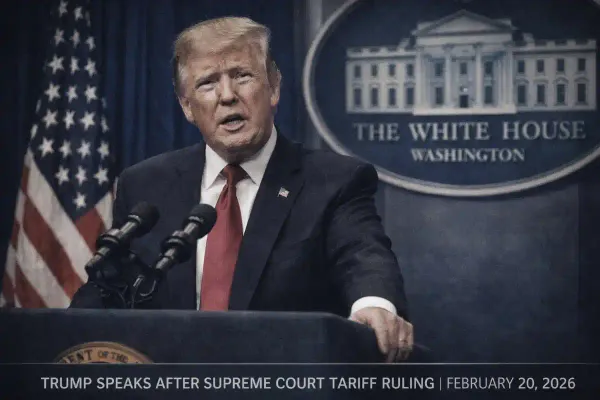
The Bully's Playbook: How Empires Punish Disobedience in 2026
Russia invaded Ukraine for wanting to join the West. China is strangling Japan for suggesting it might defend Taiwan. Trump slaps tariffs on allies who don't comply. Different weapons, but the same logic: submit or suffer.

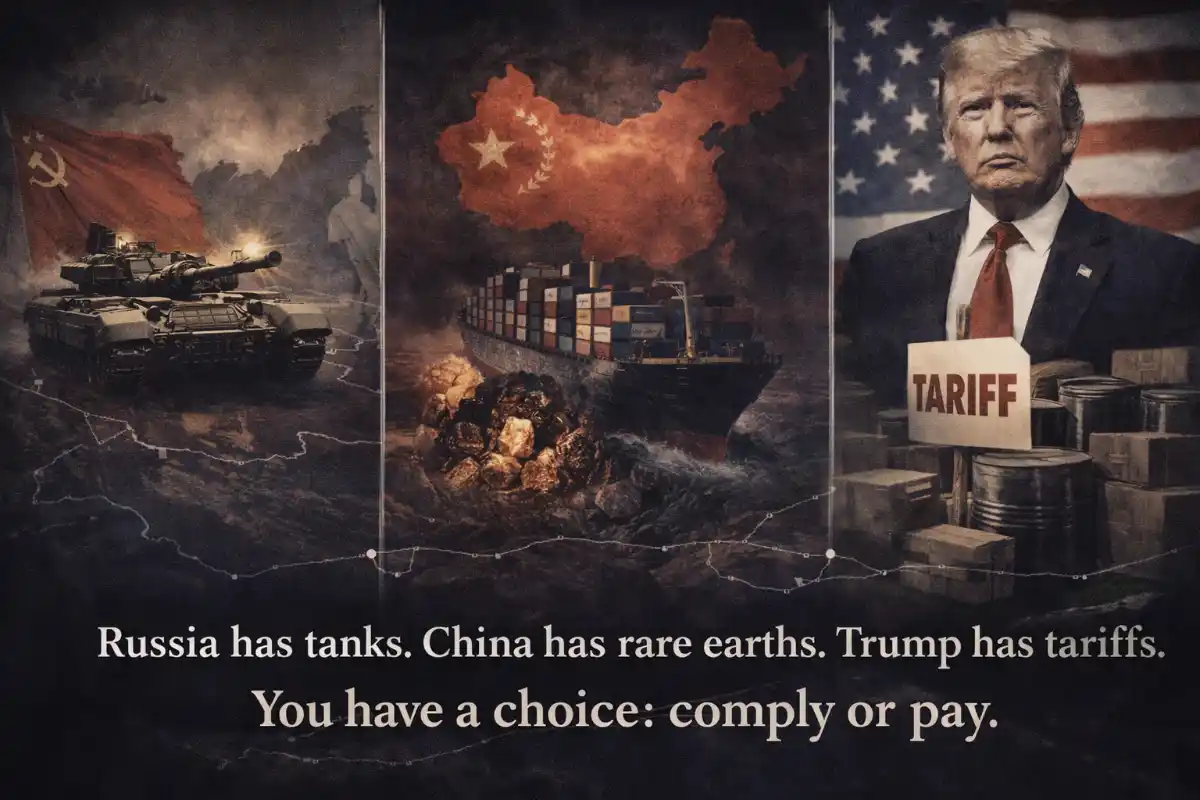
The playbook never changes. Only the weapons.
The Pattern
Here's what every empire does when a smaller country steps out of line:
- Declare a "red line"
- Wait for someone to cross it
- Punish them publicly and brutally
- Watch everyone else fall in line
It doesn't matter if the empire is Russian, Chinese, or American. It doesn't matter if the leader wears a military uniform, a Mao jacket, or an oversized red tie. The logic is identical: Obedience is rewarded. Defiance is crushed. And the crushing must be visible enough to discourage the next country that might consider independence.
This isn't ancient history. This is February 2026.
Russia and Ukraine: The Template
Ukraine's crime was simple: it wanted to join the European Union and NATO. It wanted to integrate with the West rather than remain in Russia's orbit.
Russia called this a "red line." For years, Moscow warned that NATO expansion eastward was unacceptable. Western diplomats nodded politely and kept expanding anyway. Ukraine's 2014 revolution, which ousted a pro-Russian president, was the final trigger.
The truth doesn’t trend. It survives because a few still care enough to keep it alive.
Keep The Kade Frequency transmitting.
What followed was textbook imperial punishment:
Phase 1, Economic strangulation. Russia cut gas supplies, imposed trade barriers, and weaponized Ukraine's energy dependence.
Phase 2, Territorial seizure. Crimea was annexed in 2014. The Donbas was destabilized with "separatist" forces that were transparently Russian military units without insignia.
Phase 3, Full invasion. When economic pressure and proxy warfare didn't force submission, Russia launched a full-scale military invasion in February 2022.
The message to every former Soviet state was clear: This is what happens when you try to leave.
Four years later, the war continues. Over 500,000 casualties. Cities reduced to rubble. Millions displaced. And Ukraine still hasn't submitted, which is precisely why Russia can't stop. To stop now would be to admit that defiance is survivable.
China and Japan: The Rehearsal
Now watch China do the same thing to Japan.
In November 2025, Japanese Prime Minister Sanae Takaichi made a statement that sounds perfectly reasonable to anyone who isn't running an empire: She suggested that Japan might militarily intervene if China attacked Taiwan.
Taiwan is a democracy of 24 million people. It governs itself. It has its own military, currency, passport, and elected government. It has never been controlled by the People's Republic of China, not for a single day since the PRC was founded in 1949.
But China claims Taiwan as a "breakaway province" that must be "reunified”, by force if necessary. And anyone who suggests they might help Taiwan defend itself has crossed Beijing's red line.
Japan crossed it.
Independent investigations. Imperial expansion exposed. Pattern documented.
Get investigations delivered.
Phase 1, Economic strangulation (in progress).
January 2026: China banned exports of rare earth minerals to Japan, gallium, germanium, graphite. These aren't optional materials. They're essential for semiconductors, batteries, missiles, and military electronics. China controls 60-70% of global rare earth processing. There is no quick alternative.
February 24, 2026: China blacklisted 40 Japanese companies, including Mitsubishi Heavy Industries (shipbuilding, aerospace), Kawasaki Heavy Industries, Fujitsu, Japan's space agency JAXA, and the National Defense Academy itself.
The ban covers "dual-use" items, anything that could theoretically be used for military purposes. That's over 1,000 categories of goods. Beijing's Commerce Ministry was explicit: these measures target companies "participating in enhancing Japan's military capabilities."
Translation: If you arm yourself to resist us, we'll cut off the materials you need to arm yourself.
Phase 2, What comes next?
China hasn't invaded Japanese territory. Yet. But the playbook is clear. Economic punishment comes first. Then territorial pressure, likely around the Senkaku Islands, which China claims. Then, if Japan doesn't back down, military "exercises" that blur into permanent presence.
The timeline might be years. Or it might accelerate if Taiwan becomes a flashpoint. But the direction is unmistakable.
Trump and Everyone: The American Version
Now here's where it gets uncomfortable for anyone who thinks this is just what authoritarian regimes do.
Donald Trump operates on the same logic. Different vocabulary. Same playbook.
The red lines:
- Don't run trade surpluses with America
- Don't fail to spend enough on NATO
- Don't refuse to sell your territory
- Don't contradict him publicly
The punishment: Tariffs. Sanctions. Public humiliation. Threats of withdrawal from security agreements.
Canada: Trump has repeatedly called it the "51st state", suggested annexation, and imposed tariffs that the Supreme Court just ruled unconstitutional. When the Court struck down his IEEPA tariffs on February 20, he immediately signed new ones under a different law and raised them to 15% the next day.
Greenland: Trump announced he's sending a hospital ship to Greenland, framed as humanitarian aid, but transparently a projection of American presence onto territory Denmark hasn't agreed to sell. When asked if he'd rule out military force to acquire Greenland, he refused.
Panama Canal: Trump has threatened to "take back" the canal, which the US transferred to Panama in 1999 under a treaty.
Mexico: The pressure to crack down on cartels, resulting in the killing of El Mencho last week and 70+ deaths in the aftermath, comes with implicit threats of American military intervention on Mexican soil.
Europe: Constant pressure to increase defense spending, buy American weapons, and align with American trade policy. Countries that don't comply face tariffs and public insults.
The Supreme Court ruling on February 20 was supposed to stop this. Six justices, including two Trump appointed, ruledthat the International Emergency Economic Powers Act doesn't authorize tariffs. The President cannot tax imports by declaring an economic emergency.
Trump's response? He called the justices a "disgrace," said Barrett and Gorsuch were "an embarrassment to their families," accused the Court of being "swayed by foreign interests," and immediately imposed new tariffs under a different statute.
The message: Legal limits don't apply to me.
The Logic of Bullying
Why do empires operate this way?
Because it works.
Not always. Not forever. But often enough that the strategy persists across centuries and civilizations.
The Roman Empire didn't conquer through military force alone. It conquered through the credible threat of total destruction for anyone who resisted, combined with generous terms for anyone who submitted early. The Mongols perfected this: cities that surrendered were spared; cities that resisted were massacred to the last inhabitant. Word traveled fast.
Modern empires can't massacre cities (usually). But they can destroy economies. They can cut off energy supplies in winter. They can ban the rare earth minerals your entire technology sector depends on. They can impose tariffs that raise prices for your citizens by $1,000 per household per year.
The logic is the same: Make the cost of defiance so high that rational actors choose submission.
And here's the dark truth: Most do.
Who Doesn't Submit?
Ukraine didn't submit. Four years into a war that was supposed to last weeks, they're still fighting. The cost has been catastrophic, hundreds of thousands dead, cities destroyed, a generation traumatized. But they haven't surrendered.
Japan isn't submitting. Prime Minister Takaichi just won a landslide election. She's doubling down on military expansion, not backing off her Taiwan comments. Japan is pursuing alternative rare earth sources and accelerating domestic weapons production.
Taiwan isn't submitting. Despite decades of Chinese pressure, they keep electing leaders who refuse to accept "reunification." They keep building defenses. They keep existing as a democracy 100 miles from an authoritarian superpower.
The European Union isn't fully submitting to Trump. They're analyzing the Supreme Court ruling and preparing retaliatory measures. Individual countries are diversifying away from American dependence.
Resistance is possible. It's just expensive.
The Price of Defiance
Here's what defiance costs:
Ukraine: 500,000+ casualties. $500 billion in infrastructure damage. 8 million refugees. A generation of trauma.
Japan (so far): Supply chain disruption. Higher costs for critical minerals. Economic uncertainty. The constant threat of escalation.
Anyone who crosses Trump: Tariffs that function as a tax on your own citizens. Public humiliation. The weaponization of American financial infrastructure.
The empires are betting that you'll look at these costs and decide submission is cheaper.
Sometimes they're right.
Germany increased defense spending after Trump's NATO pressure, not because they wanted to, but because the cost of American withdrawal seemed higher than the cost of compliance.
Mexico killed El Mencho, not because they believe the "kingpin strategy" works (it doesn't; it never has), but because the cost of American displeasure seemed higher than the cost of another wave of cartel violence.
Countless smaller countries have quietly adjusted their policies to avoid crossing Beijing, Moscow, or Washington. You don't hear about these submissions because they're not dramatic. They're just... compliance. The system working as designed.
What the Bullies Fear
Empires fear one thing above all: successful defiance.
If Ukraine survives as an independent democracy, every former Soviet state learns that Russia can be resisted. The empire's threat becomes less credible. Future targets become more willing to fight.
If Japan maintains its position on Taiwan without economic collapse, other countries learn that China's export bans aren't fatal. Alternative supply chains get built. Beijing's leverage diminishes.
If enough countries resist Trump's tariffs and the American economy suffers more than theirs, the strategy stops working. Future presidents might think twice before weaponizing trade.
This is why empires can never let defiance succeed. It's not about the specific territory or trade balance. It's about the precedent. It's about maintaining the credibility of the threat.
Russia can't stop the war in Ukraine because stopping would prove that resistance works.
China can't back down on Japan because backing down would encourage Taiwan.
Trump can't accept the Supreme Court ruling because accepting limits would constrain future coercion.
The bully can never let anyone see that the bully can be beaten.
The World in 2026
So here we are.
Russia is grinding through its fourth year of a war it expected to win in weeks, destroying itself as much as Ukraine, unable to stop because stopping would be worse than continuing.
China is systematically cutting off Japan's access to critical materials, rehearsing the economic warfare it will use against anyone who helps Taiwan, watching to see if strangulation works before it considers invasion.
Trump is ignoring Supreme Court rulings, imposing tariffs the judiciary says are illegal, threatening allies and adversaries alike with economic punishment for any deviation from his preferences.
Three empires. Three bullies. Three versions of the same playbook.
The weapons are different, tanks, export bans, tariffs. The rhetoric is different, “denazification," "One China," "America First." The targets are different, a former Soviet republic, an Asian democracy, basically everyone.
But the logic is identical: Submit or suffer.
The question for the rest of us is simple: What are we willing to pay for the right to say no?
The Bottom Line
Empires don't ask permission. They set red lines, then punish anyone who crosses them.
Russia did it to Ukraine with tanks and missiles.
China is doing it to Japan with rare earth bans and export controls.
Trump is doing it to everyone with tariffs and threats.
The vocabulary changes. The weapons evolve. The playbook stays the same.
Submit or suffer.
That's the offer.
The only question that matters is how many of us are willing to suffer.
FAQ Section
Why is China banning exports to Japan?
China is retaliating against Japanese Prime Minister Sanae Takaichi's November 2025 statement that Japan might militarily intervene if China attacks Taiwan. Beijing views any foreign support for Taiwan as a violation of the "One China" principle and is using economic punishment to deter other countries from taking similar positions.
What companies did China blacklist in Japan?
In February 2026, China blacklisted 40 Japanese entities including Mitsubishi Heavy Industries (shipbuilding, aerospace, marine machinery divisions), Kawasaki Heavy Industries, Fujitsu, Japan's National Defense Academy, and the Japan Aerospace Exploration Agency (JAXA). An additional 20 companies including Subaru were placed on a watchlist requiring export licenses.
What are dual-use items and why does the ban matter?
Dual-use items are products that can be used for both civilian and military purposes. China's export control list includes over 1,000 categories covering rare earth minerals (gallium, germanium, graphite), electronics, sensors, aerospace components, and specialized alloys. Japan depends on China for 60-70% of rare earth processing, making this ban potentially crippling for Japan's defense and technology sectors.
How does Trump's tariff strategy compare to China's export bans?
Both use economic punishment to force compliance. Trump imposes tariffs on countries that don't meet his demands; China bans exports to countries that cross its red lines. When the Supreme Court ruled Trump's IEEPA tariffs unconstitutional on February 20, 2026, he immediately imposed new tariffs under a different law. The logic is identical: make defiance more expensive than submission.
What is the "bully's playbook" pattern?
The pattern has four steps: (1) Declare a "red line" that other countries cannot cross; (2) Wait for someone to cross it; (3) Punish them publicly and severely; (4) Watch other countries fall in line to avoid the same fate. Russia used this against Ukraine, China is using it against Japan, and Trump uses it against allies and adversaries through tariffs and threats.
Why can't empires let defiance succeed?
If defiance succeeds, it proves resistance is survivable, which encourages future resistance. Russia cannot stop the Ukraine war because withdrawal would show that smaller countries can resist invasion. China cannot back down on Japan because it would encourage Taiwan. Trump cannot accept court limits because it would constrain future coercion. The credibility of the threat depends on defiance always being punished.
What happened when Japan's PM mentioned defending Taiwan?
In November 2025, Prime Minister Sanae Takaichi suggested Japan might militarily intervene if China attacked Taiwan. China immediately condemned the statement as interference in domestic affairs. In January 2026, China banned rare earth exports to Japan. In February 2026, China blacklisted 40 Japanese companies from receiving any dual-use items. The escalation demonstrates how quickly economic punishment follows political defiance.
Is economic warfare as effective as military force?
Economic warfare can be more effective in some cases because it avoids the international backlash and costs of military invasion while still inflicting severe damage. China's rare earth monopoly gives it leverage that tanks cannot provide. However, economic warfare also has limits, Japan is pursuing alternative suppliers, and targeted countries can build resilience over time. The question is whether the target can survive the pressure long enough to adapt.
What can countries do to resist imperial pressure?
Countries resisting imperial pressure typically pursue three strategies: (1) Diversify supply chains and reduce dependence on the coercing power; (2) Build alternative alliances for mutual support; (3) Accept short-term costs for long-term independence. Ukraine has survived four years of Russian invasion with Western support. Japan is pursuing alternative rare earth sources and accelerating domestic defense production. The EU is preparing retaliatory measures against Trump's tariffs.
Will China invade Taiwan?
China has not set a public timeline for "reunification" with Taiwan, but has never ruled out military force. The current economic warfare against Japan appears to be a rehearsal, testing whether supply chain weaponization can force compliance before military action becomes necessary. If economic pressure fails to isolate Taiwan from potential defenders, military options become more likely. Most analysts believe the risk of conflict has increased significantly since 2025.
This investigation is part of The Kade Frequency's ongoing coverage of power, coercion, and the systems that keep populations compliant.
No ads. No sponsors. Just signals from the noise.
Keep The Kade Frequency transmitting.
For more on Trump's tariff war, see: The Tariff Tantrum.
For more on institutional capture and control, see Wake Up: On Truth, Lies, and Total Institutional Capture.
Independent. Unfunded. Uncompromising.
Investigating power. Exposing corruption. Demanding accountability.
© 2026 The Kade Frequency. All rights reserved.