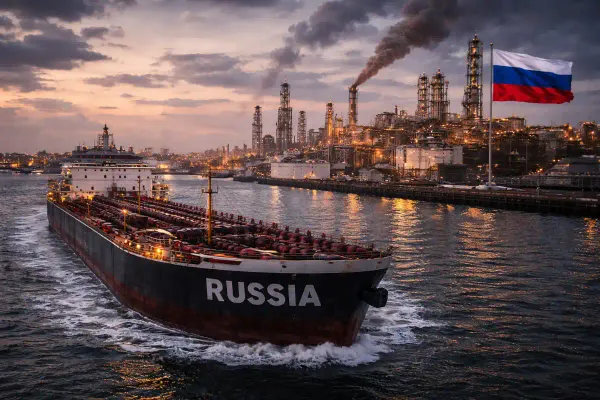
Blood and Oil: The Energy War You're Paying For
This is not a war about nuclear weapons. It is not about terrorism. It is a war about energy, who controls it, who profits from it, and who pays. You pay. Oil at $115, gas up 30%, fertilizer prices surging, food costs coming. Welcome to the energy war.
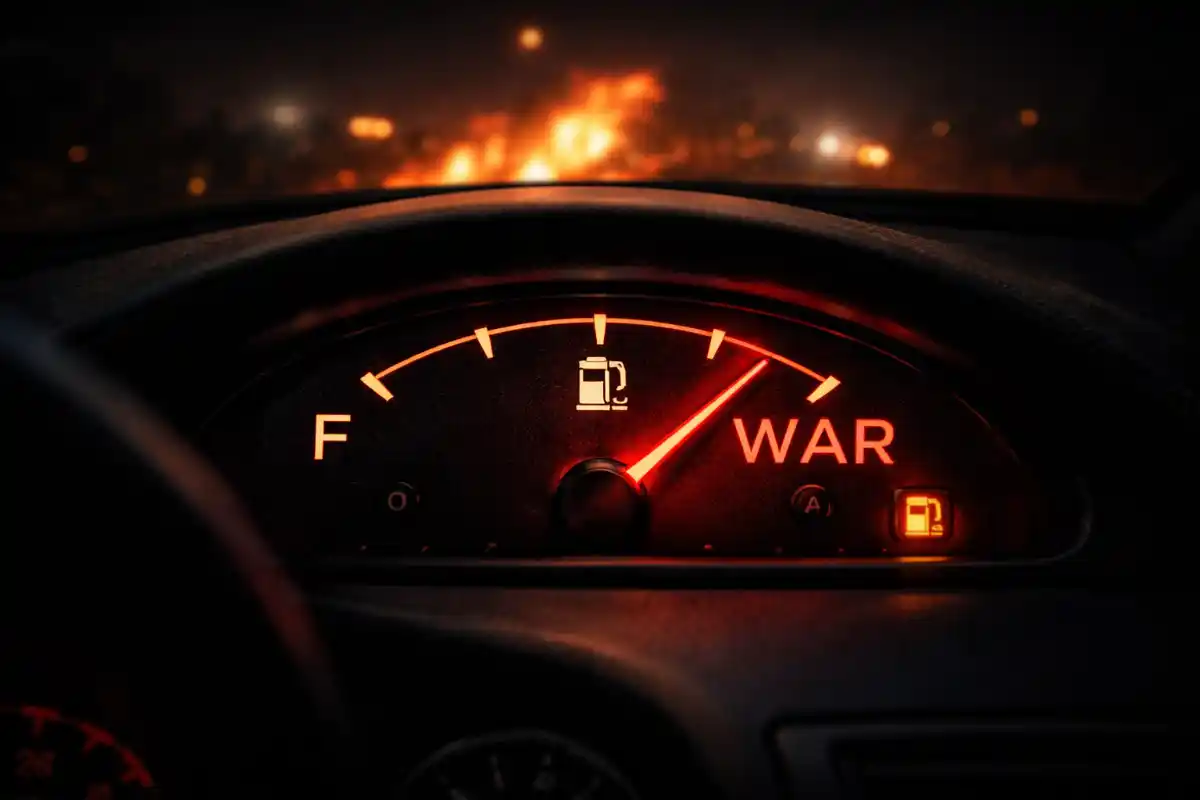
This is not a war about nuclear weapons. It is not about terrorism. It is not about defending Israel or liberating Iran. It is a war about energy, who controls it, who profits from it, and who pays. You pay.
On March 18, 2026, Israel struck South Pars, the largest natural gas field on Earth. It sits in the Persian Gulf, straddling the maritime border between Iran and Qatar. Israel knew exactly what it was hitting. Qatar's foreign ministry called it a "dangerous and irresponsible step." Hours later, Iran retaliated, not against Israel, but against Qatar's Ras Laffan facility, the world's largest LNG export terminal.
Within 24 hours, oil hit $115 a barrel. European gas prices surged 24 percent. The Japanese stock market fell 3.4 percent. Central banks across Asia issued emergency statements. And ordinary people, from Dublin to Delhi to Detroit, woke up to the reality that this war had just become personal.
Welcome to the energy war. You're already losing.
The Numbers That Should Terrify You
Let's talk about what just happened to Qatar.
QatarEnergy's CEO Saad al-Kaabi confirmed the damage on Thursday: 17 percent of Qatar's LNG export capacity destroyed. Two of 14 LNG trains damaged. One gas-to-liquids facility wrecked. The repair timeline? Three to five years. The cost? $20 billion in lost annual revenue. The facilities themselves cost $26 billion to build.
"I never in my wildest dreams would have thought that Qatar would be, Qatar and the region, in such an attack," al-Kaabi told Reuters, “Especially from a brotherly Muslim country in the month of Ramadan, attacking us in this way."
Qatar supplies 20 percent of the world's LNG. That gas heats homes in Europe, powers factories in Japan, and generates electricity across Asia. The damage will take half a decade to repair. Force majeure has been declared on long-term contracts to Italy, Belgium, South Korea, and China.
This wasn't collateral damage. This was the point.
The truth doesn’t trend. It survives because a few still care enough to keep it alive.
Keep The Kade Frequency transmitting.
$115 and Climbing
Before the war, oil was $73 a barrel. Today it's $115, up more than 60 percent in three weeks.
The International Energy Agency has called this "the largest supply disruption in the history of the global oil market." Not since the 1973 oil embargo has the world seen anything like this. Nearly 20 million barrels per day of crude and product exports have been disrupted. The Strait of Hormuz, through which one-fifth of global oil once flowed, is effectively closed.
The IEA's emergency response: a 400-million-barrel release from strategic reserves. That sounds like a lot until you do the math. At current disruption rates, those reserves buy roughly 26 days. Then what?
Oil prices haven't peaked. They've barely started.
Your Wallet, Their War
American gas prices have risen from just under $3 per gallon in late February to $3.89 as of March 19, an increase of roughly 90 cents in three weeks. That's the largest monthly gain since Hurricane Katrina. In Arizona, prices are up $1.17. In Kentucky, $1.07. In Utah, $1.04.
Diesel is worse. It's now just under $5 a gallon, up $1.34 from a month ago. Diesel powers the trucks that move your food. It powers the tractors that grow your food. It powers the trains and ships that bring everything else.
The pass-through is already starting. Time magazine calculated that Americans are paying $300 million more per day just to fill their tanks, and that's before the grocery bills hit.
"Trump has launched a war without a playbook for managing the economic fallout, and the cost-of-living crisis isn't going away anytime soon."
Jet fuel is up 85 percent. Airlines are raising prices or canceling flights. Spring break vacations are getting repriced in real time. And summer? You don't want to think about summer.
Independent investigations. Imperial expansion exposed. Pattern documented.
Get investigations delivered.
The Fertilizer Bomb
Here's what the headlines aren't telling you: the food crisis is coming.
One-third of globally traded fertilizer passes through the Strait of Hormuz. Nearly half of the world's traded urea, the most widely used nitrogen fertilizer, comes from Gulf states. When the Strait closed, 21 ships carrying nearly a million metric tons of fertilizer got stuck.
Urea prices have already jumped 32 percent in a single week. The cost for U.S. farmers? One ton of urea now costs the equivalent of 126 bushels of corn, up from 75 bushels in December. That math makes planting decisions brutal.
The timing couldn't be worse. It's spring planting season in the Northern Hemisphere. Farmers from Kansas to Karnataka are making purchasing decisions right now, and the fertilizer they need either isn't available or costs 40 percent more than it did three weeks ago.
The Council on Foreign Relations warns that reduced fertilizer application means reduced crop yields, and that means higher food prices six months from now, when you've already forgotten this war existed.
But you'll remember it at the grocery store.
The Coalition of the Unwilling
Israel struck South Pars knowing what would happen. Netanyahu admitted Israel "acted alone" on the gas field attack. Trump claimed the U.S. "knew nothing", a claim his own sources immediately contradicted.
Iran retaliated knowing what would happen. They didn't just hit Qatar, they warned five specific facilities in Saudi Arabia, the UAE, and Qatar would be targeted. Then they followed through.
Now the Gulf states that supported this war are paying for it with their own infrastructure.
Saudi Arabia's foreign minister said "the little trust that remained in Iran has been completely shattered." Qatar expelled Iranian diplomats within 24 hours. The UAE shut down its Habshan gas facilities after debris from an intercepted strike caused damage.
Al-Kaabi said it plainly: "If Israel attacked Iran, it's between Iran and Israel. It has nothing to do with us and the region."
But it does now. The Gulf states wanted regime change in Tehran. They got an energy war that's destroying their own economies.
Who Wins
Let's be clear about who benefits from $115 oil.
Not you. Not the trucker paying $5 for diesel. Not the farmer watching fertilizer prices double. Not the family canceling their summer vacation because flights cost twice as much.
The winners are the same winners as always.
Oil majors. Defense contractors. The perfect industry we wrote about two weeks ago. Sovereign wealth funds with diversified portfolios. Russia, which suddenly has leverage again as the only major oil producer whose exports aren't disrupted. China, which is already offering Taiwan "energy stability" if it agrees to reunify, because Beijing understands what this war means better than Washington does.
Trump himself said it out loud: because the U.S. is the world's largest oil producer, "We make a lot of money" when oil prices go up.
He's right. America's oil industry makes money. America's people pay the price.
The Trap
Here's the sick irony of this war.
Trump won the presidency in part by promising to bring down the cost of living. Gas prices fell below $3 in December. He took credit for it. He said the economy was "great."
Then he launched a war that raised gas prices 30 percent in three weeks. Diesel is up 37 percent. Food prices will follow. Airline tickets will follow. Everything that moves will cost more, and everything costs something that moves.
The World Economic Forum put it bluntly: "The U.S. has imposed enormous costs on many of the same economies it relies on as trading and strategic partners."
And what's the endgame? Netanyahu says there are "thousands of targets remaining" in Iran. The war could last three more weeks, minimum. Oil at $115 is not the ceiling, it's the floor. The Strait of Hormuz remains contested. The IEA's emergency reserves will run out before the war does.
This is not an accident. This is not bad luck. This is the cost of a war of choice launched without a plan to manage the consequences, or with a plan that simply didn't give a shit about the consequences.
The Bill
You will pay for this war.
Not in American lives, mostly, though 13 service members are dead and 200 wounded. Not in Iranian lives, mostly, though 1,444 are dead by official count, probably three times that in reality. Not in Lebanese lives, though a million people are displaced and a thousand are dead.
You will pay at the pump. At the grocery store. On your heating bill. On your flight to see family. On everything that requires energy, which is everything.
The NBC News analysis was direct: "Higher fertilizer costs will contribute to higher prices at U.S. supermarkets." Food-at-home inflation could rise 2 percentage points from this war alone. That's on top of everything else.
The war hasn't liberated anyone. It hasn't made anyone safer. It hasn't eliminated any nuclear threat that didn't exist in the first place, as the IAEA confirmed three days before the bombs fell.
What it has done is transfer wealth. From your pocket to theirs. From the people who fill gas tanks to the people who own oil wells. From the farmers who buy fertilizer to the Gulf states that sell it. From ordinary citizens to defense shareholders.
Blood and oil. The oldest trade in the Middle East.
You're paying for both.
Frequently Asked Questions
Why did oil prices spike during the Iran war?
Oil prices surged from $73 to over $115 per barrel because the Iran war disrupted the Strait of Hormuz, through which 20% of global oil flows. The International Energy Agency called it "the largest supply disruption in the history of the global oil market," with nearly 20 million barrels per day of exports affected.
What happened to Qatar's Ras Laffan LNG facility?
Iran struck Qatar's Ras Laffan Industrial City on March 18, 2026, in retaliation for Israel's attack on Iran's South Pars gas field. The attack destroyed 17% of Qatar's LNG export capacity, causing $20 billion in annual lost revenue. QatarEnergy declared force majeure on long-term contracts to Italy, Belgium, South Korea, and China. Repairs will take 3-5 years.
How much have US gas prices increased during the Iran war?
US gas prices rose from under $3 per gallon in late February to $3.89 by March 19, 2026, an increase of roughly 90 cents or 30% in three weeks. This represents the largest monthly gain since Hurricane Katrina. Diesel prices increased even more, reaching nearly $5 per gallon, up $1.34 from pre-war levels.
Will the Iran war cause food prices to rise?
Yes. One-third of globally traded fertilizer passes through the Strait of Hormuz. Urea prices jumped 32% in one week. Analysts estimate the disruption could raise "food-at-home" inflation by roughly 2 percentage points as reduced fertilizer availability affects crop yields during spring planting season.
What is South Pars and why did Israel attack it?
South Pars is the world's largest natural gas field, located in the Persian Gulf and shared between Iran and Qatar. Israel struck it on March 18, 2026, Netanyahu admitted Israel "acted alone." The attack triggered Iranian retaliation against Gulf energy infrastructure, escalating the war into a regional energy conflict that threatens global supply chains.
A. Kade
The Kade Frequency - No sponsors, no filters, no propaganda.